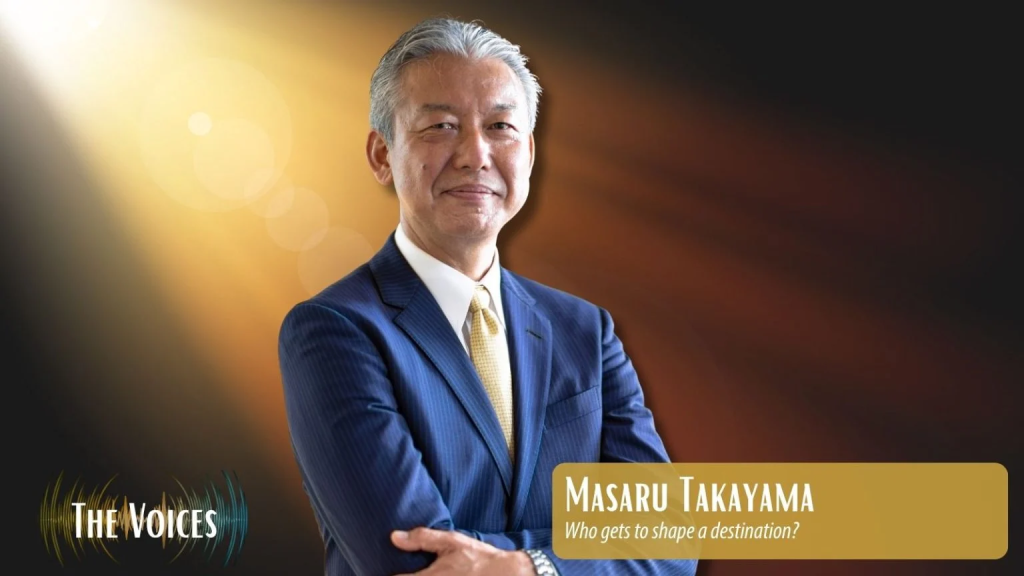
Masaru Takayama has helped build ecotourism standards and networks across Asia. He argues that education, measurable practice and authority for local communities matter more than a green claim.
Masaru Takayama likes to arrive in a place where he does not understand the language. A lifelong sea kayaker and scuba diver, he describes the unfamiliarity as part of feeling like a traveller. The pleasure comes with an obligation: visitors encounter living environments and communities, rather than a product set aside solely for their enjoyment.

Born in Kyoto and educated in Japan, the United States and Costa Rica, Masaru trained in oceanography before building a career in responsible tourism. His work spans ecolodge guidance, assessments and tourism standards across Asia and beyond. He founded the Asian Ecotourism Network and says its reach grew from nine to 17 countries over a decade. The network helped develop ecotourism standards for ASEAN and Bhutan and trained local leaders and officials to assess them. For Masaru, the human relationships built across its rotating host destinations are as significant as its geographical reach.
Communities as Decision-Makers
A standard has little value if it remains in the hands of a visiting expert. Masaru wants local people able to observe, question and maintain practice after an assessment is over. He argues that residents should become decision-makers in destination planning, with ways to report what visitor activity is doing to the place they know. That can mean examining pressure on infrastructure and natural resources, or asking whether a cultural practice is being presented on terms the community itself supports.
Education Before Certification
He is especially concerned about where professional learning begins. Sustainability may be optional or missing when people train to run a hotel, open a travel agency or guide visitors. A specialist certification can improve the organisations ready to pursue it, but it may reach only a small part of the sector. Masaru would build environmental stewardship into education and relevant licensing much earlier. His proposed change is slow by design: the next generation of operators should regard care for a destination as ordinary professional competence.
Standards That Survive Assessment

Visiting an operation to evaluate it is different from endorsing a pledge on paper. An effective assessment looks at how waste is handled, how staff are treated and trained, and whether the surrounding community has a genuine voice. Even then, conditions can change. Masaru therefore favours education and everyday indicators that residents and local businesses can continue to use, rather than a one-time declaration of success.
He also wants claims to be testable. A business or destination can adopt environmental language while leaving its operational effect unclear. Indicators, independent scrutiny and repeated local observation can expose the difference. Hands-on experience with rainwater harvesting, biodiversity protection, waste management and community engagement keeps the argument connected to practical implementation. Conservation must be paid for, managed and checked in any community or business that intends to thrive over the long term.
Conservation, Community, Culture and Commerce
His framework brings together conservation, community, culture and commerce. The fourth term matters. He rejects the assumption that caring for a place must be opposed to earning a sustainable livelihood. But economic success measured only by visitor volume can hide the costs carried by residents. If local heritage is turned into a static attraction or the people who sustain it lose a say in decisions, a destination may grow in numbers while losing its character and vitality.

Masaru asks public bodies, businesses of all sizes, visitors, and community leaders to share the work. Policy can require education and useful measures; operators can change their practices; visitors can travel mindfully; residents can identify effects outsiders might miss. No single certificate can carry out all of that work. His ambition is for tourism that contributes to ecological repair and to a living culture, with local people holding authority over the choices that shape both.

A crowded destination and an emerging community may need different measures. In one, the warning signs could be pressure on housing or water and increasing friction between residents and travellers. In another, they may be the absence of local ownership or benefits despite new arrivals. Masaru wants the people living with those effects to help define what a healthy visitor economy looks like. Their living knowledge and ancestors’ wisdom can correct a plan that appears sound from a distant office.
Why This Voice Matters
The traveller who enjoys being disoriented in an unfamiliar place is therefore not seeking a blank canvas. Masaru’s curiosity depends on the distinctiveness of places and the authentic lives lived in them. His long work with standards is a practical attempt to keep that encounter possible, and to ensure that the local community benefits as much as the person passing through.