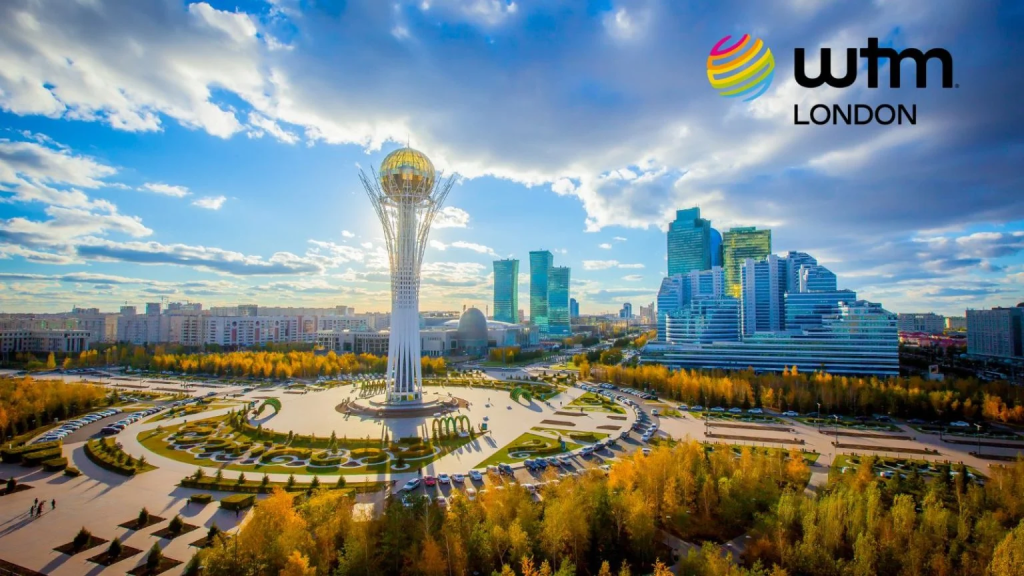
Kazakhstan is strengthening international tourism through aviation agreements, the phased introduction of QazETA, infrastructure investment and adventure travel partnerships, targeting greater accessibility and destination competitiveness.
As World Travel Market (WTM) London 2026 brought international tourism professionals together from 3 to 5 November, Kazakhstan’s recent policy developments highlighted its efforts to strengthen its position in Central Asian tourism. The country is pursuing a Kazakhstan tourism strategy that combines expanded air connectivity, digital entry procedures and investment in mountain, cultural and adventure tourism. Recent measures include a new aviation agreement with the European Union, the phased introduction of the QazETA electronic travel authorisation system and international partnerships supporting nature-based tourism development.
- Kazakhstan is expanding international aviation access through new routes, airport investment and a June 2026 agreement with the European Union.
- The QazETA electronic travel authorisation system began its phased rollout on 1 November 2026 and will become mandatory for relevant travellers from 1 July 2027.
- The government is supporting adventure tourism, mountain resorts and Silk Road destinations through infrastructure projects and international industry cooperation.
International tourism promotion focuses on nature and cultural heritage
WTM London provided a timely international context for Kazakhstan’s efforts to develop its tourism offering beyond established business travel markets. The country’s strategy increasingly emphasises mountain landscapes, national parks, cultural heritage and adventure experiences, alongside its role as a regional transport hub. These products offer opportunities for international tour operators developing Central Asian itineraries.
Kazakhstan’s principal nature-based destinations include Charyn Canyon, the Kolsai Lakes, and the mountain areas surrounding Almaty. Meanwhile, the historic Silk Road cities of Turkestan and Taraz support cultural itineraries connected with Central Asia’s trading heritage. Traditional nomadic experiences, including yurt accommodation and horse riding, provide additional options for specialist tourism programmes.
The government has also strengthened cooperation with international adventure travel organisations. In August 2026, national tourism company Kazakh Tourism signed a memorandum of understanding with the Adventure Travel Trade Association (ATTA). The agreement covers destination assessment, professional training, familiarisation trips and opportunities for further international industry engagement.
Aviation agreements strengthen access to Kazakhstan
International air connectivity is a central component of Kazakhstan’s tourism strategy. Throughout 2026, the country’s Civil Aviation Committee has pursued additional international services connecting Kazakhstan with destinations in Europe, Asia and the Middle East. The programme involves domestic and foreign airlines, alongside infrastructure development at major and regional airports.
In June 2026, Kazakhstan and the European Union signed a Horizontal Aviation Agreement designed to expand market access for eligible European airlines. The agreement removes certain nationality-based restrictions and provides opportunities for services between Kazakhstan and 17 EU member states covered by the arrangement. However, the agreement does not itself confirm the launch of new flights.
The Civil Aviation Committee’s 2026 route programme included Air Astana services to destinations such as Shanghai and Larnaca, alongside new connections planned by other carriers. LOT Polish Airlines also announced Almaty–Warsaw services as part of the year’s network development. Meanwhile, Kazakhstan continued discussions with other aviation authorities to create opportunities for additional international connections.
In September, Kazakhstan and Switzerland signed a memorandum of understanding allowing designated airlines to operate up to 28 weekly passenger services. The agreement establishes a framework for future flights, although the announcement did not confirm an operating schedule. Such arrangements are part of Kazakhstan’s wider efforts to improve access for international visitors and strengthen regional aviation connectivity.
QazETA introduces phased electronic travel authorisation
Kazakhstan introduced the first operational phase of its QazETA electronic travel authorisation system on 1 November 2026. The government adopted the relevant resolution on 10 October, establishing a gradual transition towards digital pre-travel authorisation for foreign nationals entering under visa-free arrangements. The system aims to improve migration processing, advance screening and the management of traveller information.
The initial phase covers Aktau International Airport and four road border crossings. From 1 January 2027, the system will extend to Astana and Almaty international airports, followed by other border crossings in March. QazETA will become mandatory for travellers covered by the rules from 1 July 2027, following a transitional period.
During the transition, eligible travellers will not face refusal of entry solely because they lack QazETA authorisation. However, they are encouraged to obtain it before travelling. Applications are free of charge and should be submitted at least 72 hours before arrival, with approved authorisations remaining valid for 180 days.
Importantly, QazETA does not replace a visa where one is required, extend the permitted duration of stay or guarantee admission. For tour operators and travel agents, the phased implementation introduces an additional requirement to monitor when advising international customers. Businesses will also need to distinguish between electronic travel authorisation and Kazakhstan’s separate electronic visa procedures.
Tourism infrastructure investment targets regional destinations
Alongside aviation and entry reforms, Kazakhstan is investing in tourism infrastructure outside its principal cities. The government’s Tourism Development Concept through 2029 includes measures covering destination diversification, accommodation development, transport access and service quality. Priority areas include ecotourism, adventure travel, gastronomy, cultural tourism and business events.
According to a government review published in 2026, Kazakhstan plans to develop 24 internationally branded hotels across 11 regions. The authorities are also pursuing regional airport projects and improvements to roads serving recreational areas. These investments are intended to support tourism development in destinations that currently face limitations in transport access and accommodation supply.
Mountain tourism is another priority. The government has outlined plans for the Almaty mountain cluster, including additional cable cars and ski infrastructure. The longer-term programme envisages 30 cable cars and 161 kilometres of trails, supporting a target of up to five million annual visitors to the wider mountain tourism area.
These developments could strengthen access to winter tourism destinations such as Shymbulak and Oi-Qaragai. Nevertheless, infrastructure projects remain subject to implementation schedules, and long-term visitor targets should not be interpreted as current tourism performance.
Adventure tourism becomes a focus of international cooperation
Kazakhstan’s collaboration with ATTA represents a further step towards developing adventure and sustainable tourism products. The August agreement includes international assessment of regional tourism potential, training for industry professionals and cooperation on familiarisation programmes. Discussions have also addressed visitor safety and professional standards for guides and tourism instructors.
The partnership is relevant to destinations offering trekking, horse riding, wildlife experiences and cultural journeys. For international adventure travel operators, reliable local guides, accommodation and transport infrastructure are essential when developing commercial programmes. Consequently, improvements in professional training and destination management could support Kazakhstan’s efforts to compete for specialist international visitors.
The government’s figures also indicate growing interest in protected natural areas. Visits to national parks increased from 2.4 million in 2023 to 3.7 million in 2025, according to official data. During the first half of 2026, parks recorded approximately 1.7 million visitors, while the country maintained 179 tourism routes and 42 ecological trails within protected areas.
What Kazakhstan’s tourism reforms mean for travel businesses
The combination of aviation development, digital entry procedures and destination investment creates opportunities for inbound operators, hotels and international travel distributors. Improved international connections can make Kazakhstan easier to incorporate into Central Asian itineraries, while infrastructure development may expand the range of destinations suitable for organised travel. However, the commercial benefits will depend on flight availability, operating costs and the reliability of tourism services.
For European tour operators, cultural and adventure travel offer opportunities to develop programmes combining cities, national parks and historic Silk Road destinations. The country’s emerging mountain tourism infrastructure could also support winter travel products. At the same time, growing demand will require careful management of environmental pressures, particularly in protected landscapes and mountain areas.
The introduction of QazETA presents a different operational consideration. Although digital authorisation may improve administrative processes over time, the transition creates new responsibilities for travel businesses communicating entry requirements. Accordingly, operators should monitor implementation dates and ensure that customers understand whether electronic authorisation applies to their nationality and travel circumstances.
The Kazakhstan tourism strategy also places greater emphasis on cooperation between public authorities and private businesses. Government investment can improve transport and destination infrastructure, but international market growth will depend on the ability of local suppliers to develop competitive, bookable tourism products.
Kazakhstan prepares for the 2026–2027 tourism season
Kazakhstan enters the winter 2026–2027 period with several tourism policy initiatives under way. These include new aviation agreements, the initial rollout of QazETA and continued investment in mountain tourism infrastructure. International cooperation on adventure travel adds another component to the country’s efforts to diversify its visitor economy.
The next stages of implementation will be important for tourism operators and international distributors. QazETA will expand to the country’s two principal international airports in January 2027, while aviation and resort infrastructure projects will continue under their respective development programmes. Together, these measures create a framework to improve Kazakhstan’s accessibility and strengthen its position in the Central Asian tourism market.