Southeast Asian nations take a stand against disruptive and intrusive tourism
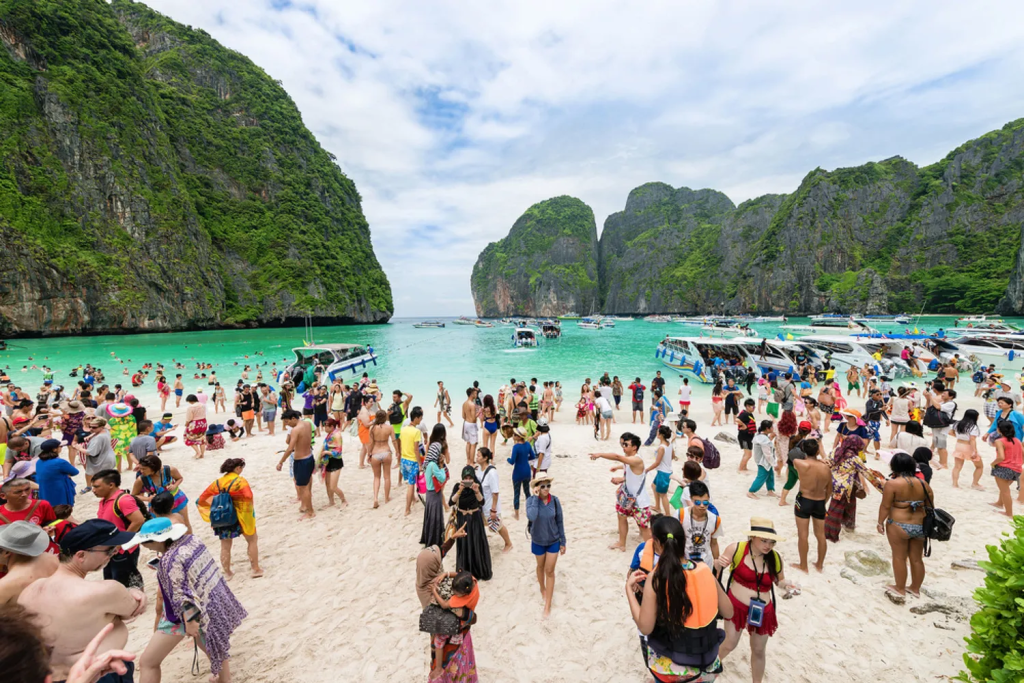
Across Southeast Asia, the post-pandemic travel boom has brought back a familiar, unwelcome spectre: the disruptive, intrusive, and environmentally destructive tourist.
For years, idyllic enclaves such as Bali, Phuket, and Siargao built their economies on hyper-growth and unbridled visitor volume.
Today, those same hotspots are grappling with severe environmental degradation, cultural friction with local communities, and infrastructure strained to breaking point.
In response, regional destinations are quietly executing a radical strategy shift as the age of unconstrained mass tourism draws to a close.
Indeed, destinations are making way for high-value, sustainable models designed to protect local heritage whilst curbing bad behaviour.
Zero tolerance in key locations
For too long, Southeast Asia’s most popular island escapes were treated as lawless playgrounds.
That era is swiftly ending as governments establish firm boundaries for visitor conduct, backed by unyielding legal consequences.
Bali has led the charge by introducing a formal tourist conduct guide detailing strict behavioral rules, explicitly prohibiting disrespectful conduct at sacred temples and holy mountains.
Crucially, local authorities have matched these guidelines with action: immigration departments across the region have stepped up enforcement, actively deporting visitors who break local laws, work illegally on tourist visas, or disregard local customs.
On the ground, everyday lawlessness is also being tackled: traffic and licensing crackdowns, particularly in Bali and Phuket, have seen police targeting dangerous scooter rentals through rigorous checks for helmets and international driving permits, reducing strain on emergency services and keeping local roads safe.
A conscious shift from a quantity- to quality-driven paradigm
To complement physical enforcement, destinations are leveraging economic policies to shift visitor demographics.
By introducing entry fees and higher financial thresholds, destinations aim to attract higher-spending, longer-staying travellers who statistically cause fewer public disruptions.
Bali’s introduction of a US$10.00 visitor levy earmarked specifically for environmental preservation and cultural protection marks a key turning point.
Scaling similar levies across destinations such as Phuket could generate crucial funding for overstretched waste management and water systems.
Furthermore, discussions around raising visa fees and requiring proof of adequate funds upon entry ensure that visitors can support themselves without resorting to illegal local employment.
Protecting environmental treasures via geographic distribution
Restricting visitor volumes in sensitive ecological zones has proven to be one of the most effective tools against irreversible environmental damage.
Thailand’s successful rehabilitation of Maya Bay and the Philippines’ landmark temporary closure of Boracay provided a blueprint for the region.
Destinations such as Siargao are now considering periodic, targeted closures of specific lagoons and surf breaks to allow fragile marine ecosystems time to regenerate.
Alongside temporary shutdowns, daily visitor caps on island tours and limited boat permits are helping protect delicate reefs and beaches from being overwhelmed.
Meanwhile, relieving pressure on hyper-congested destinations requires actively spreading visitor footfall.
Tourism boards across Southeast Asia are increasingly promoting satellite destinations to redistribute economic benefits while curbing overcrowding.
By steering travellers away from Phuket and towards neighbouring Phang Nga, or encouraging Bali visitors to explore Lombok and East Java, tourism authorities are establishing healthier travel patterns.
Concurrently, promotional campaigns are shifting away from rowdy nightlife toward eco-tourism, wellness, and agritourism, naturally attracting a more conscious and respectful demographic.
The need for improved governance
Underpinning these measures is the adoption of modern technology, enabling local governments to track visitor flows and enforce regulations in real time.
Official mandatory registration systems and tracking dashboards allow municipalities to monitor real-time crowd density at high-footfall sites, enabling proactive crowd control before bottlenecks occur.
Meanwhile, centralized digital tracking for accommodation and vehicle rentals is closing the loop on illegal, unregistered businesses, ensuring that every visitor’s spend directly contributes to local tax revenues and infrastructure maintenance.
By combining strict enforcement, strategic pricing, environmental caps, and smart technology, Southeast Asia is rewriting its tourism playbook.
By doing so, it ensures that its world-famous island destinations remain sustainable for generations to come.