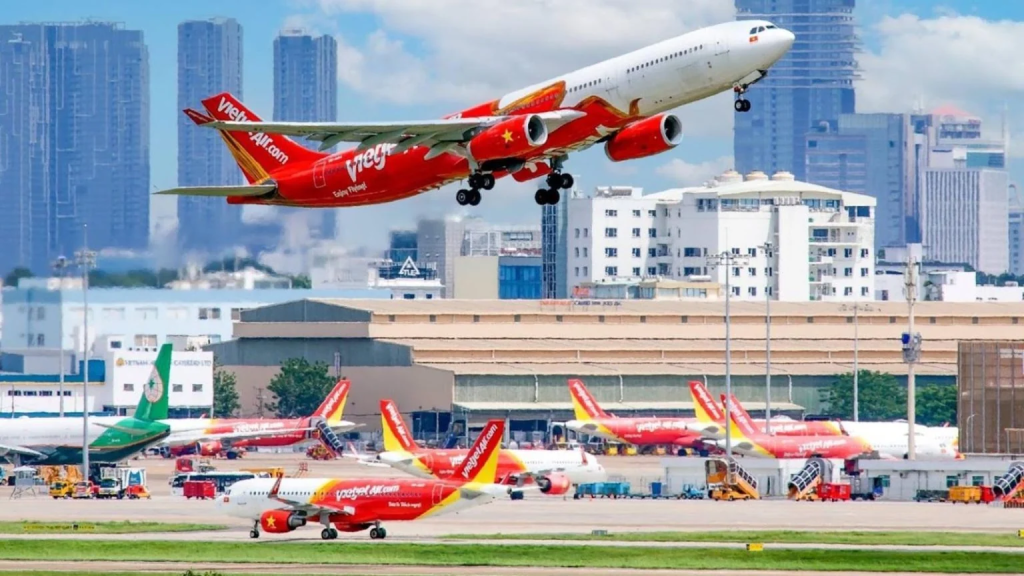
Vietjet reports 41% revenue growth to US$2.89 billion during the first nine months of 2026, carrying 20.7 million passengers while announcing three new international routes.
Vietjet reported a 41% year-on-year increase in consolidated revenue to about US$2.89 billion in the first nine months of 2026, supported by passenger operations, ancillary services, and international expansion. The Vietnamese airline carried more than 20.7 million passengers and expanded its network to 223 routes during the reporting period. Alongside the latest Vietjet revenue growth figures, the carrier announced new services connecting Hanoi with Colombo and the Maldives, as well as Da Nang with Jakarta, strengthening aviation links across South and Southeast Asia.
- Vietjet generated approximately US$2.89 billion in consolidated revenue during January–September 2026, up 41%, with net profit after tax reaching US$66.8 million.
- The airline carried more than 20.7 million passengers across 111,700 flights and expanded its network to 223 routes, including 176 international services.
- New services will connect Da Nang with Jakarta from December 2026 and Hanoi with Colombo and the Maldives from February 2027.
Vietjet reports 41% revenue growth in the first nine months of 2026
The airline’s financial results reflect continued expansion across its aviation activities. Consolidated revenue reached approximately US$2.89 billion during the first nine months of 2026, representing 86% of Vietjet’s full-year revenue target.
Meanwhile, net profit after tax totalled approximately US$66.8 million, equivalent to 82% of the company’s annual target. The performance included contributions from passenger transportation, freight operations, ancillary services and aircraft financing activities.
In the third quarter alone, Vietjet generated approximately US$886.7 million in consolidated revenue, up 35% from the same period in 2025. Net profit after tax reached approximately US$13.5 million.
During the quarter, the airline operated 39,000 flights and transported 7.3 million passengers, maintaining its expansion across domestic and international markets.
As of 30 September 2026, Vietjet reported consolidated assets of approximately US$5.93 billion. Its net debt-to-equity ratio stood at 2.4 times, while the liquidity ratio reached 1.38 times.
The figures indicate significant revenue expansion, although the airline continues to manage the capital requirements associated with fleet development and network growth.
Passenger traffic exceeds 20.7 million as network reaches 223 routes
Vietjet operated 111,700 flights during the first nine months of 2026, carrying more than 20.7 million passengers. The airline also transported over 58,000 tonnes of freight, reflecting activity across its wider aviation business.
Its network reached 223 routes by the end of September, comprising 176 international and 47 domestic connections. This international footprint supports Vietjet’s strategy of connecting Vietnam with major economic and tourism markets across Asia and beyond.
International network development remains a central part of the company’s expansion plans. Alongside additional routes, Vietjet is investing in fleet capabilities, operational efficiency and technology to support a larger route network.
For Vietnam’s tourism industry, the expansion provides opportunities to increase international access to destinations beyond the country’s largest gateways. However, the commercial benefits will depend on passenger demand, flight frequencies and the ability of destinations to attract and retain international visitors.
Vietjet launches Da Nang–Jakarta service in December 2026
One of the airline’s next international additions will connect Da Nang with Jakarta, Indonesia’s capital. The route is scheduled to begin on 20 December 2026, with four return flights each week.
Services will operate on Mondays, Wednesdays, Fridays and Sundays, adding a direct connection between Vietnam and Indonesia.
Da Nang is an important tourism gateway for Central Vietnam, providing access to beach destinations and cultural attractions. The city also serves as a starting point for visits to Hoi An, Hue and the UNESCO-listed My Son Sanctuary.
Meanwhile, Jakarta provides access to Indonesia’s largest urban market, with demand across business, leisure and visiting-friends-and-relatives travel.
The new service could support two-way tourism flows and provide travel agencies with additional opportunities to develop Vietnam–Indonesia itineraries. Furthermore, it strengthens Da Nang’s international network as the destination seeks to attract visitors from a broader range of Asian markets.
New Hanoi flights to Colombo and the Maldives begin in February 2027
Vietjet has also opened bookings for services connecting Hanoi with Colombo, Sri Lanka, and the Maldives. Both connections are scheduled to begin on 9 February 2027, with three return flights per week on Tuesdays, Thursdays and Saturdays.
The Maldives service will operate via Colombo, providing a connection between northern Vietnam and the Indian Ocean destination. Consequently, it should not be classified as a nonstop Hanoi–Maldives flight.
The new routes expand Vietjet’s reach into South Asia and give tourism operators opportunities to develop itineraries combining Vietnam with Sri Lanka or the Maldives.
For the Maldives, additional aviation connections can support access from Asian source markets. Meanwhile, Sri Lanka gains another link to Vietnam, creating opportunities for leisure travel and tourism cooperation.
The new services follow Vietjet’s announcement of a Ho Chi Minh City–Maldives connection via Colombo, scheduled to commence on 5 December 2026 with three weekly return flights.
Singapore connections support regional travel opportunities
Vietjet’s international expansion also provides additional options for passengers travelling from Singapore. The airline currently operates direct services connecting Singapore with Ho Chi Minh City, Hanoi, Da Nang and Phu Quoc.
Furthermore, Vietjet plans to introduce a direct Singapore–Nha Trang service on 11 December 2026, extending its network to another Vietnamese coastal destination.
These routes allow Singapore-based travellers to access multiple destinations within Vietnam and connect with the airline’s wider international network.
For travel agencies and tour operators, the growing number of connections may support multi-destination packages combining Vietnamese cities with destinations elsewhere in Asia. However, connection availability and journey times will depend on published schedules.
Long-haul expansion connects Vietnam with Europe and Australia
Beyond its regional network, Vietjet is extending its international reach through additional services connecting Vietnam with Central Asia, Europe and Australia.
The airline has launched Hanoi services to Almaty in Kazakhstan and Prague in the Czech Republic, widening its network beyond traditional Southeast Asian destinations.
Meanwhile, Vietjet has announced a new Ho Chi Minh City–Western Sydney service, with operations scheduled to begin in January 2027. The addition is intended to strengthen its presence in the Australian aviation market.
These routes reflect the airline’s efforts to serve longer-distance international markets while expanding connectivity through its Vietnamese gateways.
For tourism businesses, new international connections can create opportunities to diversify source markets and develop packages for travellers combining several destinations within one journey.
Fleet investment and technology partnerships support expansion
Vietjet is also investing in operational capabilities to support its expanding international network. The airline continues developing partnerships covering fuel efficiency, aircraft materials management, artificial intelligence, digital technology and cybersecurity.
Among these initiatives is its cooperation with Starlink, part of SpaceX, to introduce high-speed satellite internet connectivity on board aircraft.
Improved onboard connectivity could strengthen passenger services, particularly as Vietjet increases its exposure to longer international journeys. However, the airline has not confirmed a fleet-wide completion date for the planned connectivity programme.
The broader technology initiatives are intended to support operational efficiency and service development as the company’s fleet and route network expand.
What Vietjet’s expansion means for tourism and aviation markets
The combination of stronger financial performance and network expansion highlights Vietjet’s growing role in connecting Vietnam with international tourism markets.
For destinations such as Da Nang and Nha Trang, new international services can improve market access and support the distribution of visitors beyond Ho Chi Minh City and Hanoi. Meanwhile, additional connections to Indonesia, Sri Lanka and the Maldives provide opportunities for regional tour operators to develop new travel products.
The carrier’s expansion also creates opportunities for airports, accommodation providers and destination management companies. However, new route announcements do not automatically translate into higher visitor arrivals or stronger hotel occupancy.
Airline profitability will also depend on sustainable demand, operational efficiency and the financial requirements associated with fleet investment. Vietjet’s reported net debt-to-equity ratio of 2.4 times underlines the importance of balancing expansion with financial management.
Nevertheless, the airline’s 41% revenue increase and passenger growth demonstrate continued commercial momentum during the first nine months of 2026.
Vietjet prepares for further international growth in 2027
Vietjet enters the final months of 2026 with an expanded network, stronger revenue and several additional international services scheduled to begin before February 2027.
The airline’s immediate network priorities include Da Nang–Jakarta, Singapore–Nha Trang and its new Maldives connections via Colombo. Meanwhile, its wider international strategy includes services linking Vietnam with Central Asia, Europe and Australia.
With more than 20.7 million passengers transported during the first nine months of 2026, Vietjet continues to combine network development with investment in its operational and digital capabilities. The performance of its new routes will help determine how effectively the airline converts its international expansion into sustained growth during 2027.