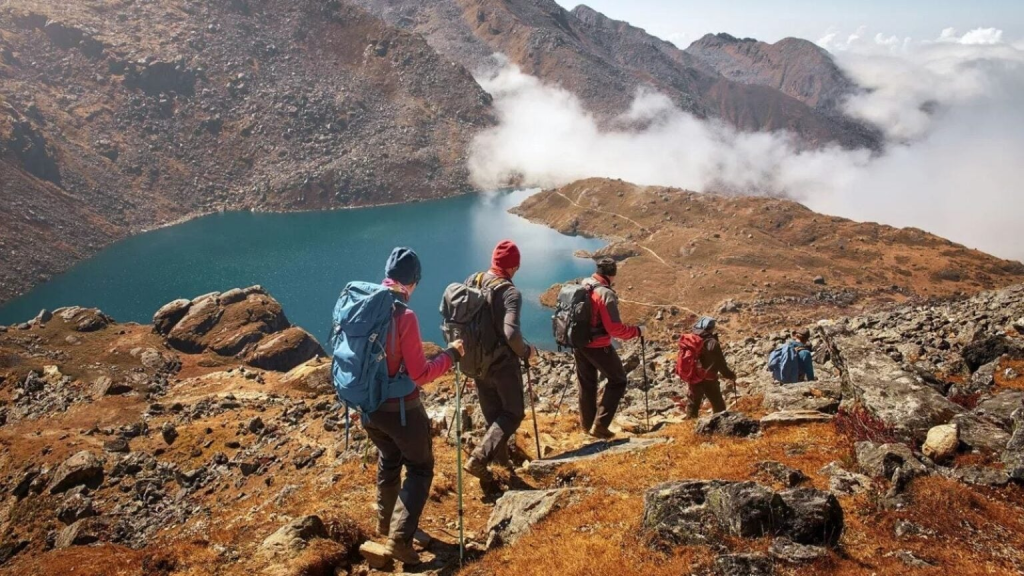
Nepal tourism data shows record visitor stays and strong growth in the Annapurna region, while daily spending declined and Bardiya National Park recorded fewer arrivals.
Nepal tourism recorded contrasting results during the latest reporting periods, with foreign visitors staying longer and arrivals rising sharply in the Annapurna region. However, average daily spending declined, while Bardiya National Park received fewer visitors during the 2025-26 fiscal year.
Government data shows that the average stay of foreign tourists reached a record 16.34 days in 2025. At the same time, average daily spending fell to US$33.09, the second-lowest level recorded and well below the regional average of US$100-US$150.
The figures indicate that longer visits are not producing a corresponding increase in tourism revenue. Trekking, mountaineering and leisure travel continue to support extended stays, although tourism businesses report difficulties in attracting visitors with higher spending levels.
Daily tourism spending continues long-term decline
Tourist spending in Nepal has declined since reaching US$79.10 per day in 2003. The lowest recorded level was US$31.90 in 1996, when the country received 393,613 tourists.
The 1996 result coincided with the beginning of the armed conflict launched by the Communist Party of Nepal (Maoist) against the government. The conflict followed attacks on police posts across several districts and continued to affect the country’s political and economic environment.
The Tourism Ministry said the latest length-of-stay data is more reliable than earlier estimates. Since 2025, the figures have been generated through a centralised electronic tourism management information system.
Hoteliers have linked Nepal’s low visitor spending to transport safety concerns, price competition and political disruptions. These factors have continued despite new investment in luxury hotels and resorts across the country.
Annapurna arrivals exceed 500,000
The Annapurna Conservation Area received 508,476 foreign tourists from 169 countries during the last fiscal year, which ran from 17 July 2025 to 16 July 2026. This compared with 278,113 visitors in fiscal year 2081/82.
Visitors from South Asian countries accounted for 384,145 arrivals, while 124,331 came from other markets. India generated 375,797 visitors and remained the largest source market for the conservation area.
China ranked second with 12,539 visitors, followed by the United States with 9,884. The United Kingdom generated 9,859 arrivals, while France accounted for 7,939.
Malaysia recorded 7,848 visitors, Germany 7,634 and Bangladesh 7,448. Australia generated 7,095 arrivals, while 6,398 visitors came from Israel.
Dr Rabin Kadariya, Head of the Annapurna Conservation Area Project, reported a substantial increase in arrivals from South Asian countries. Indian visitor numbers rose by nearly 300% during Jeth, covering the period from 15 May to 14 June.
The increase was linked to the promotion of Pokhara and Muktinath, improved transport access and destination content shared through social media. Indian travellers also visited Pokhara and surrounding areas during the warmer months in their domestic market.
Hotel occupancy in Pokhara reached up to 90% during Baisakh and Jeth. According to the conservation project, about 40% of Indian visitors travelling to Pokhara also continued to Muktinath.
Trekking destinations support Annapurna demand
The Annapurna Conservation Area covers 7,600 square kilometres across Kaski, Lamjung, Manang, Myagdi and Mustang. It includes 87 wards within 15 local government areas.
Its trekking routes connect destinations including Annapurna Base Camp, Mardi Himal, Ghorepani, Tilicho Lake, Thorong La Pass, Upper Mustang and Muktinath. The region’s tourism offer also includes Himalayan communities, cultural sites and biodiversity areas.
The increase in Annapurna arrivals provides one source of volume growth for Nepal tourism. However, the national spending figures show that higher visitor numbers and longer stays do not automatically translate into greater daily revenue for businesses.
Bardiya National Park records lower arrivals
Bardiya National Park welcomed 27,025 visitors during the 2025-26 fiscal year, down from 28,068 in the previous year. Park authorities linked the decline to domestic protests and the effect of the conflict in West Asia on international travel.
Nepali visitors accounted for 18,907 of the total. The park also received 6,901 foreign tourists from countries outside the South Asian Association for Regional Cooperation and 1,217 visitors from SAARC member states.
Entrance fees generated Rs32.6 million during the fiscal year. Visitor traffic reached its highest levels during the autumn and spring travel seasons.
The park received 4,851 visitors in October and November, while 4,739 entered during March and April. Only 294 tourists visited during the final month of the fiscal year, when the monsoon season was underway.
Mahesh Neupane, the park’s information officer, said: “The Gen Z protests on September 8 and 9 last year affected tourist travel.”
He added: “The war in West Asia has also reduced the number of foreign visitors.”
Jeep safaris continue during the monsoon
Bardiya has continued to operate jeep safaris during the monsoon, unlike several other national parks in Nepal. Park officials said rainfall had not damaged or blocked the road network.
Ashok Ram, the park chief, said the condition of the roads allowed safari operations to continue. Thakurdwara serves as the main entrance, handling approximately 99% of visitor traffic, while Rammapur serves as the secondary gateway.
Tourism activities in and around the park include jeep safaris, guided jungle walks, rafting and fishing. Visitors also travel to the Babai Valley, Karnali Bridge at Chisapani, the crocodile breeding centre and the elephant breeding facility.
The latest wildlife census recorded 125 tigers in Bardiya National Park. The protected area also has an estimated 120 elephants and 38 one-horned rhinoceroses.
Tourism infrastructure around the park includes more than 30 hotels and 20 homestays. Visitors also travel to nearby communities and sites within the Khata Biological Corridor.
Destination performance remains uneven
The latest results show uneven performance across Nepal tourism destinations. Annapurna recorded a large increase in international arrivals, supported mainly by demand from India, while Bardiya experienced a moderate decline.
At the national level, visitors are remaining in Nepal for longer periods. Nevertheless, lower daily expenditure continues to limit the financial contribution per tourist day.
The figures highlight the differences among visitor volume, length of stay, and tourism receipts. Nepal’s tourism sector recorded growth in select destinations, but spending data indicate that the economic return from international tourism remains under pressure.