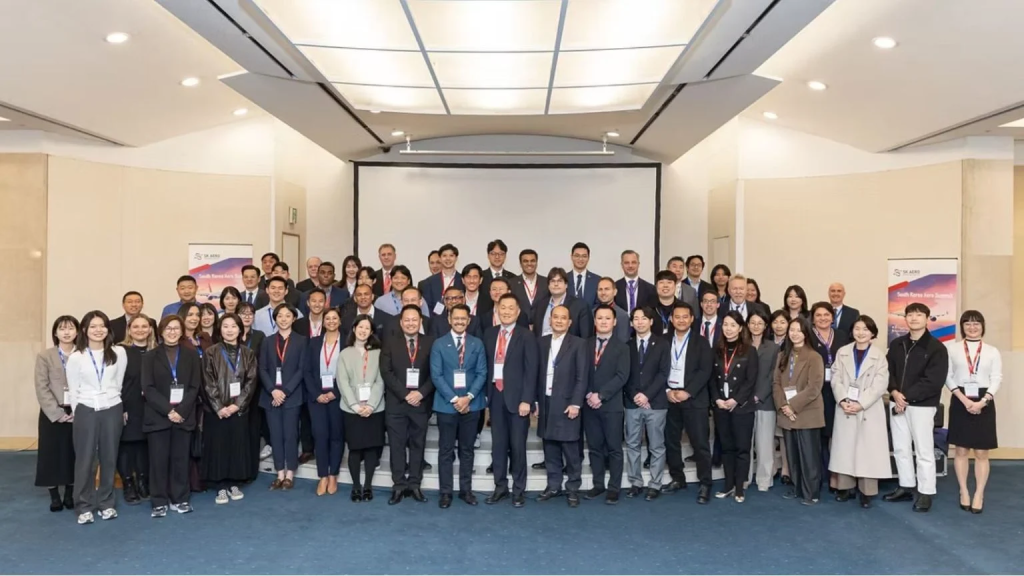
SK AERO 2026 will bring more than 200 aviation professionals and 30-plus speakers to Seoul to discuss growth, MRO, safety, sustainability and passenger experience.
Growth prospects, operational resilience and long-term competitiveness in South Korea’s aviation sector will be at the centre of the 2nd Annual South Korea Aero Summit 2026 (SK AERO 2026), taking place in Seoul on 21–22 October. The event will be held at the Nine Tree Premier ROKAUS Hotel Seoul Yongsan and will bring together aviation executives, industry stakeholders and international experts.
The summit comes as South Korea’s aviation sector balances strong post-pandemic demand with new macroeconomic and geopolitical pressures. While traffic volumes remain above pre-pandemic levels, airlines and airports are also responding to higher operating costs, route changes and a more uncertain international environment.
South Korean aviation market continues to expand
South Korea ranks eighth worldwide in air transport volume according to the International Air Transport Association. In 2025, data from the Ministry of Land, Infrastructure and Transport showed that total air traffic exceeded 1.01 million flights.
This represented a 6.8% year-on-year increase and an average of 2,778 flights per day. The total was also nearly 20% above pre-pandemic levels, underlining the pace of South Korea aviation growth following the disruption of recent years.
However, geopolitical developments in early 2026, particularly conflicts in the Middle East, introduced additional pressure. Fuel shortages, higher jet fuel costs and altered flight routes led South Korean carriers to make operational adjustments, including capacity reductions and unpaid leave.
Reflecting those conditions, Incheon International Airport revised its annual passenger growth expectations to 2% for 2026.
Longer-term forecasts remain more positive. According to Boeing’s Commercial Market Outlook, passenger traffic in South Korea is projected to grow at an annual rate of 3.7% over the next decade.

More than 200 participants expected in Seoul
Following its inaugural edition in 2025, SK AERO 2026 is expanding its scope. Organised by Innowinn Group, the two-day summit is expected to attract more than 200 participants and over 30 expert speakers.
Representatives will come from international airlines, regulatory bodies, maintenance, repair and overhaul providers, airport authorities and aerospace technology suppliers.
The conference programme will combine keynote presentations, panel discussions, interactive showcase exhibitions and an exclusive site visit. The format is designed to connect different parts of the aviation ecosystem while examining both immediate operating challenges and longer-term strategic priorities.
MRO, safety and sustainability among key themes
Market outlook and strategic development will form one of the principal discussion areas, with sessions examining traffic forecasts, fleet expansion and the economic impact of aviation growth across the region.
Maintenance, repair and overhaul will also feature prominently. Discussions will focus on strengthening domestic MRO capabilities and improving supply chain efficiency as operators manage growing fleets and increasingly complex maintenance requirements.
Flight operations and safety management will address safety protocols, training standards and operational performance across commercial aviation. Meanwhile, sustainability sessions will examine carbon reduction, fuel efficiency and the adoption of Sustainable Aviation Fuel.
Passenger experience and innovation will form another key track, looking at how next-generation technologies can support airport operations and improve customer journeys.
Summit targets wider Northeast Asian partnerships
SK AERO 2026 is also positioned as a platform for companies seeking stronger commercial and strategic ties across Northeast Asia. The event will bring together decision-makers from across the regional and international aviation industries to exchange market intelligence and explore potential partnerships.
As South Korea’s aviation sector continues to expand while adapting to geopolitical and economic pressures, the summit will provide a forum for discussions around resilience, sustainability and future investment. Its agenda reflects the wider challenges facing airlines, airports and aviation suppliers as the region plans for the next phase of air transport growth.