Ahead of AIME 2026, Travel Daily Media takes a look at the advantages the Antipodean nation has over the competition
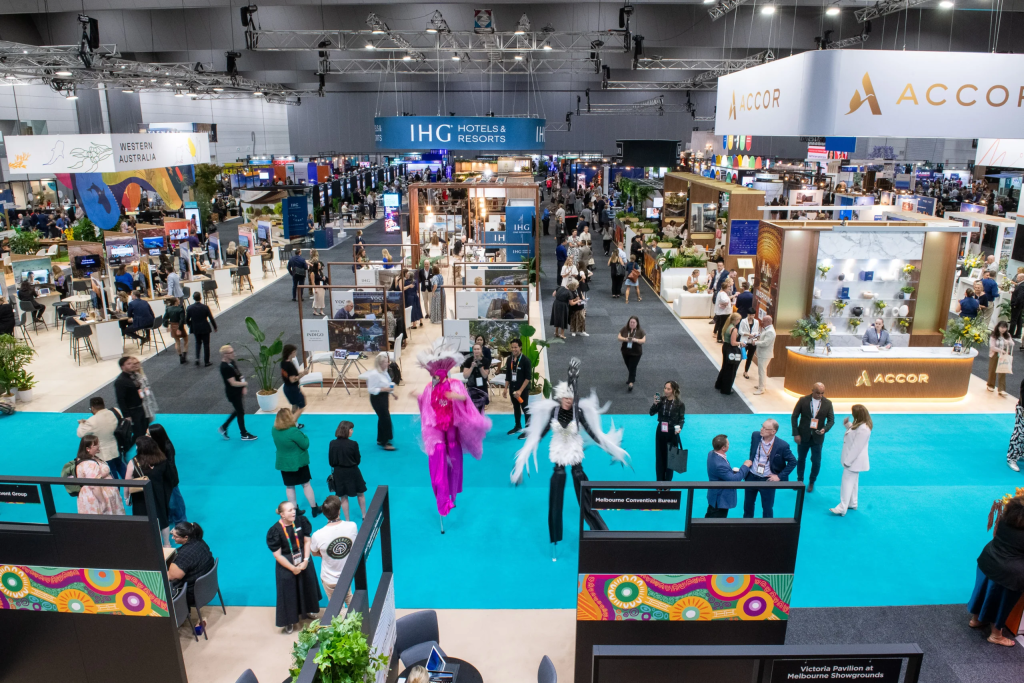
With the Asia Pacific Incentives and Meetings Event (AIME) 2026 coming up in Melbourne next week, Australia again comes to the fore of both the regional and global events industry.
Around 750 exhibitors are set to bring their best to Australia for the occasion, and it is estimated that the event will welcome approximately 5,000 delegates from around the world.
To go by an August 2025 report from 6W Research, the Australian meetings, incentives, conferences, and exhibitions sector (MICE) has recovered significantly from the losses incurred throughout the pandemic years.
According to the report: “The country’s strategic geographic location, advanced infrastructure, and scenic destinations make it an attractive hub for international and regional business events.”
The Australian formula for MICE success
So, what specifically does this Antipodean nation have going for it with regard to its continued success in MICE?
Consider this: the Australian government sees tourism and trade as two key pillars of the national economy, hence its active support for the industry which is further bolstered along by significant private investment in both convention infrastructure and event-centric technologies.
Indeed, experts point out that:
“The Australian MICE market is heavily influenced by government policies that support tourism and business events. The Australian Trade and Investment Commission (Austrade) plays a key role in promoting Australia as a destination for MICE tourism through international marketing campaigns and business event grants. The government offers funding to support business event organizers, including assistance with travel costs for international delegates and grants to host major conferences and exhibitions.”
Another factor working in Australia’s favour is the way its event organisers, venues, and suppliers actively ensure that sustainability lies at the core of their work.
Indeed, as policies around sustainability become more important and even mandatory, the Australian MICE sector has been shifting to greener practices in their operations.
At the same time, digital transformation is another factor driving the growth of the sector; indeed, those pushing to invest in Australian MICE are putting their money into hospitality tech, smart venues, as well as business travel concierge startups.
Challenges facing the industry
But it is not all jam, so to speak for Australian MICE: the industry faces a number of issues that are affecting the way it operates.
The AI Horizons Research report pointed out the following issues adversely impacting the industry:
- Supply chain disruptions even post-pandemic;
- Pricing pressures given the rising cost of living and inflation; and
- Regulatory barriers such as visa restrictions and health protocols.
Costs, in particular, are a serious matter for the Australian MICE scene: rising costs for venue rental, accommodation, transport, and catering make it difficult to provide value-driven packages to clients.
Visa restrictions are also an issue, as a good number of professionals in various fields tend to think twice before attending overseas events due to increasingly stringent regulations for application.
Indeed, these two specific issues are driving those organising global events to contemplate other destinations within the Asia Pacific to host their functions, thus making industrial competition more intense on a regional, even global, level.
How Australia can adapt and develop moving forward
In an increasingly competitive industry, Australia has long had an advantage in the way it has adapted to changing situations over time.
This resilience has helped it in the past and will continue to aid the industry moving forward.
Resilience aside, the Australian MICE industry should also consider the following:
- Greater adoption of relevant technologies and hybrid events This entails the application of artificial intelligence in back-end services to enhance overall efficiency in operations, Augmented and virtual reality tech could also make hybrid events more interactive, allowing for wider regional and global reach at less cost to organisers;
- Sustainability and safety Event facilities that are both safe and eco-friendly, partnered with sustainable practices and stringent protocols will help boost participant confidence and also raise the country’s profile as a green and sustainable destination; and
- Improved human resources mechanisms We previously discussed the matter of staff burnout in our piece on mental health in the business events sector and the measures we recommended for preventing burnout among MICE professionals (and those in Australia are the most hard-working) apply in this case. Indeed, preventing staff burnout by avoiding back-to-back scheduling and increasing training, especially in IT and service standards, is vital for long-term sustainability for the industry.
As the global MICE sector continues to evolve, so, too, do the individual sectors in each country.
In Australia’s case, the MICE sector appears to be moving from strength to strength, rising above the competition to remain one of the best countries in the world for business events and other functions.