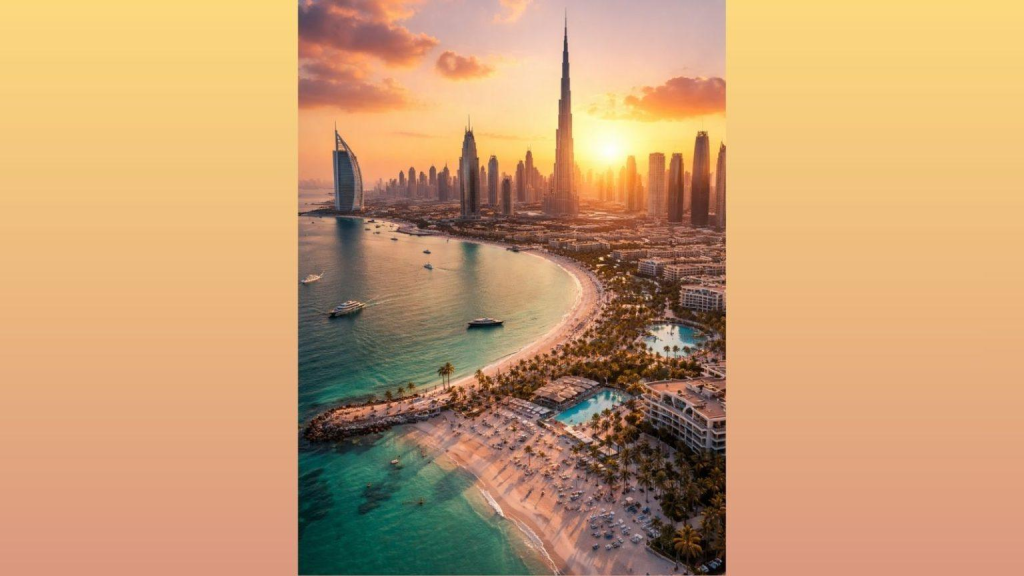
Dubai’s spectacular skyline and resort coastline have made the city a magnet for global traveller
Recent tensions across the Gulf have sparked renewed debate about the resilience of Middle East tourism. Travel writer and former hotel executive Andrew J. Wood examines how Dubai’s remarkable tourism success story remains closely tied to regional stability and global confidence.
BANGKOK — For decades, Dubai has projected an image of certainty in an uncertain region, a gleaming oasis of luxury, efficiency and opportunity in the heart of the Middle East. Towering hotels, record-breaking attractions and one of the world’s busiest aviation hubs have transformed a once modest trading port into a global tourism powerhouse.
Yet the latest surge in tensions across the Gulf has highlighted a simple reality: tourism in the Middle East ultimately depends on stability. When conflict looms, confidence can disappear quickly.
A recent European headline captured the mood bluntly:
“The dream world of Dubai bursts during the war: suddenly the tourist is just an unwashed person without a hotel room.”
Dramatic perhaps, but it reflects an underlying truth. When flights are disrupted or security fears grow, even the most sophisticated tourism systems can stall overnight.
Dubai’s rise is one of the most remarkable economic transformations of modern times. With relatively modest oil reserves, the emirate reinvented itself through aviation, tourism, finance and global trade. Massive investment in infrastructure positioned the city as a crossroads between Europe, Asia and Africa.
The result has been extraordinary growth. Millions of travellers pass through Dubai each year, drawn by its luxury hotels, beaches, shopping festivals and reputation for safety and efficiency. Few destinations have built such a powerful global brand in such a short time.
But tourism is ultimately a confidence industry. Travellers will cross continents to visit places they perceive as safe, accessible and stable. The moment that perception shifts, demand can change almost overnight.
Across the wider Middle East this cycle is familiar. Destinations from Egypt to Jordan and the Gulf states have experienced tourism booms during calm periods only to see visitor numbers soften when regional tensions dominate headlines. Even conflicts far from major resorts can influence traveller behaviour.
Dubai is particularly sensitive to these shifts because its economy is so closely linked to international mobility. Aviation connectivity, expatriate investment and global tourism are central pillars of the emirate’s success. Any disruption to airspace, shipping routes or regional security can quickly ripple through the hospitality sector.
Geography also plays a role. The United Arab Emirates sits close to the Strait of Hormuz, one of the world’s most strategically important waterways. When tensions escalate between regional powers and the West, the Gulf inevitably comes under intense global scrutiny.

Dubai’s magnificent unique architecture
None of this diminishes Dubai’s extraordinary achievements. Few cities have reinvented themselves so boldly or successfully. From a modest Gulf trading port it has evolved into one of the world’s most recognisable tourism destinations.
Yet the current climate offers a reminder that Dubai’s prosperity remains closely tied to regional calm. The very strengths that built the city, connectivity, openness and international appeal, also make it sensitive to shifts in confidence.
The so-called “Dubai bubble” is therefore less a criticism than a reality check. When stability prevails, Dubai thrives brilliantly. When tensions rise, the fragility of tourism in a volatile region becomes impossible to ignore.