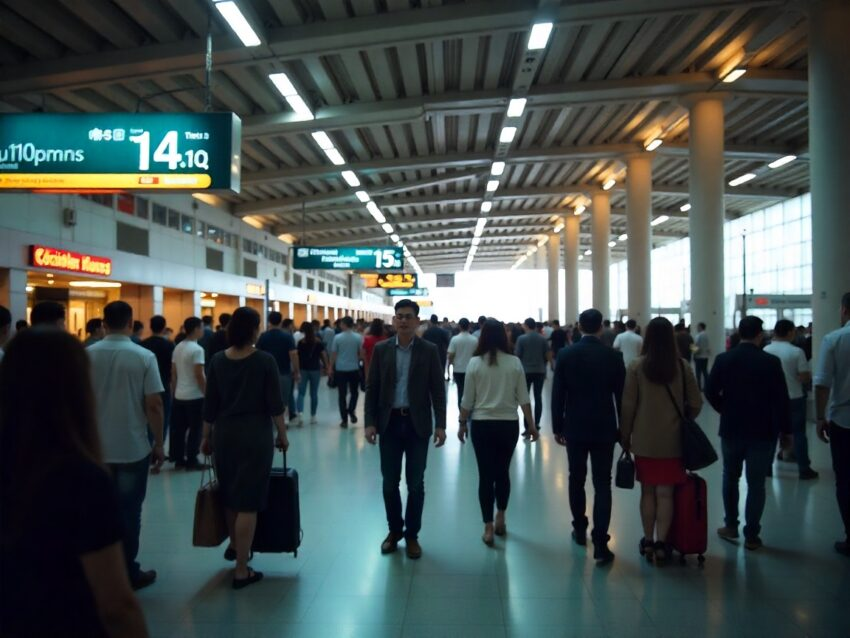
Thailand, Vietnam, and Singapore are suddenly at the center of a quiet but consequential shift in Asian travel, and travelers are beginning to notice. Thailand’s decision to raise its international airport passenger service charge to 1,120 baht has landed at a time when the region’s tourism balance is already in motion, pushing travelers to reconsider how and where they fly. While Thailand still commands one of the largest aviation networks in Southeast Asia, the added cost is narrowing the gap that once made Bangkok the default gateway. Vietnam, fresh off a record year of international arrivals and buoyed by expanding airport infrastructure and competitive airfares, is positioning itself as a value-driven alternative for both leisure and long-haul travelers. Singapore, long known for efficiency rather than affordability, now finds itself newly competitive as travelers weigh total journey cost against reliability and seamless connections. Airlines are quietly adjusting routes, frequencies, and pricing strategies in response, while hotels across the region recalibrate offers to retain guests who now have more compelling choices than ever. For tourists planning trips in 2026, this moment marks more than a tax increase—it signals a recalibration of Southeast Asia’s travel hierarchy, where price sensitivity, connectivity, and experience are converging in ways that could reshape how millions choose their next destination.
Thailand Raises Airport Taxes—Tourists React:
Thailand has long been one of the world’s easiest travel decisions. Warm beaches. Reliable flights. A hotel for every budget. In late 2025, that certainty began to wobble. The Thai government approved a sharp increase in international airport taxes, raising the passenger service charge from 730 baht to 1,120 baht. For travelers, it sounds minor. For airlines and hotels, it changes the math. Across Asia, competitors are watching closely. Some are already moving faster.
This shift arrives at a sensitive moment. Thailand recorded about 33 million foreign visitors in 2025, down roughly seven percent from the year before. Vietnam, by contrast, surged past 21 million international arrivals with double-digit growth. Airlines, hoteliers, and travelers are reacting in real time. The question is no longer whether Thailand remains attractive. The question is how travelers will choose when prices rise and alternatives feel easier.
Thailand Raises Airport Taxes—Tourists React to Higher Travel Costs
Airport taxes rarely make headlines. This one did. The new international passenger charge applies to all outbound foreign travelers flying from Thailand’s major airports, including Bangkok and Phuket. For a family of four, that is nearly 1,600 baht added to the trip. For solo budget travelers, it matters even more.
Airlines immediately felt the pressure. On price-sensitive routes, every dollar counts. Southeast Asia is one of the world’s most competitive aviation markets. Travelers compare fares across multiple hubs. When Bangkok becomes more expensive to depart from, airlines adjust or travelers reroute.
For tourists, the reaction has been mixed. Thailand still delivers value. Street food, local transport, and mid-range hotels remain affordable. But flight pricing shapes first impressions. A slightly higher ticket can be enough to push travelers to consider Hanoi, Ho Chi Minh City, or Singapore instead.
Thailand Raises Airport Taxes—Airlines Reposition as Competition Heats Up
The airline response has been swift and strategic. Flag carriers and low-cost airlines alike are recalibrating routes, frequencies, and fares.
Thai Airways remains central to Thailand’s connectivity. The airline carried more than eight million passengers in mid-2025 alone, posting strong cabin factors near 80 percent. Demand is still there. But margins are tighter. Higher airport charges increase operating costs. Thai Airways is focusing on higher-yield routes, premium cabins, and long-haul travelers who are less price sensitive.
Low-cost carriers face tougher choices. While AirAsia and similar airlines thrive on volume, rising fees challenge their ultra-low-fare model. Some frequencies are being reduced on marginal routes. Others are being shifted to regional destinations with lower charges and strong demand.
Meanwhile, competitors smell opportunity. Vietnam Airlines is expanding aggressively. New routes and added frequencies connect Vietnam directly to Northeast Asia, Australia, and Europe. For travelers, Vietnam increasingly feels just as accessible as Thailand, often at a lower total cost.
Singapore Airlines benefits from a different angle. Singapore is a premium hub. Travelers already expect higher prices but also expect seamless connections. As Bangkok’s price advantage narrows, Singapore becomes more competitive for long-haul stopovers and regional connections.
Vietnam’s Rise Changes the Travel Equation
Vietnam’s growth is not accidental. It is strategic. In 2025, the country recorded more than 21 million international visitors, with strong arrivals from China, South Korea, the United States, Japan, India, and Australia. Infrastructure is expanding fast. New terminals, upgraded airports, and simplified e-visa access make entry smoother.
For airlines, Vietnam offers growth without congestion. Slot availability is improving. Costs remain lower than many regional hubs. Carriers can scale quickly.
For travelers, Vietnam delivers diversity. Beaches in Da Nang and Phu Quoc. Food culture in Hanoi. Urban energy in Ho Chi Minh City. Prices remain competitive. When combined with growing air connectivity, Vietnam feels like the new Southeast Asian sweet spot.
Thailand still leads in brand recognition. But Vietnam is closing the experience gap faster than many expected.
Hospitality Industry Adjusts to Shifting Air Traffic
Airlines move first. Hotels follow closely. Thailand’s hospitality sector remains vast and resilient, but patterns are changing.
Marriott International, Accor, Hilton, and Hyatt all maintain deep footprints in Thailand. Bangkok, Phuket, Chiang Mai, and Samui remain strong performers. Yet occupancy growth has softened in urban markets. Resorts are holding up better, driven by long-stay travelers and luxury demand.
Hotels are responding with flexibility. More bundled offers. Airport transfers included. Flexible cancellation policies. Targeted promotions for Indian, Middle Eastern, and Russian travelers, who showed resilience in 2025.
Vietnam’s hotel sector is expanding rapidly. International brands are opening new properties in Hanoi, Ho Chi Minh City, and coastal destinations. For travelers, this means more familiar standards at competitive prices. For Thailand, it means increased competition for the same traveler segments.
Where Travelers Are Coming From Now
Travel demand is fragmenting by source market. Understanding who is traveling matters more than ever.
Malaysia remained Thailand’s largest source market in 2025, driven by proximity and short-haul travel. Even small price increases affect weekend trips. India emerged as a bright spot. Indian arrivals grew strongly, supported by expanded direct flights from major Indian cities. Weddings, incentive travel, and long stays fueled hotel demand.
Russia continued to support resort destinations, particularly Phuket. Longer stays and higher spend per visitor helped offset declines elsewhere. China remained critical but volatile. Safety perceptions and price sensitivity influenced booking behavior throughout 2025.
Vietnam, meanwhile, captured strong growth from South Korea and China while steadily increasing arrivals from the United States and Europe. This diversified base makes Vietnam less vulnerable to swings in a single market.
Flight Details Travelers Should Know
For travelers planning trips in 2026, flight dynamics matter.
Bangkok remains one of Asia’s busiest hubs, offering extensive connectivity across continents. Direct flights link Bangkok to Europe, the Middle East, Australia, and North America. Transit options remain strong, but fares may reflect higher charges.
Vietnam’s major gateways now rival Bangkok in connectivity. Hanoi and Ho Chi Minh City offer increasing nonstop options to Northeast Asia, Australia, and Europe. Transit times are improving as airports expand.
Singapore remains the region’s smoothest transfer hub. While fares are often higher, efficiency and reliability attract premium travelers and families seeking predictable connections.
For budget travelers, routing via Vietnam or Kuala Lumpur may reduce total costs. For premium travelers, loyalty benefits and lounge access may outweigh small price differences.
What This Means for Tourists Planning a Trip
Thailand is not becoming expensive overnight. It is becoming more comparable. Travelers should plan smarter.
Booking early matters. Fare differences widen closer to departure. Flexible travel dates help absorb price increases. Comparing departure cities within Thailand can also save money, as regional airports may offer different fare structures.
Hotels are offering value in new ways. Extended-stay discounts. Complimentary breakfasts. Resort credits. Tourists should look beyond headline room rates and consider total value.
Vietnam offers strong alternatives for travelers seeking novelty without sacrificing comfort. Singapore suits travelers prioritizing efficiency and premium service.
The best strategy is choice. Southeast Asia now offers multiple hubs with similar connectivity. Travelers benefit from competition.
Airline and Hotel Loyalty Programs Gain Importance
As prices converge, loyalty matters more. Airlines are leaning on frequent flyer programs to retain passengers. Hotels are doing the same.
Elite status perks, upgrades, and flexible policies can offset higher base costs. Travelers who concentrate spending with one airline or hotel group may find better overall value, even if ticket prices rise slightly.
Thailand’s established hospitality brands still excel in service depth. Vietnam’s newer properties offer modern design and competitive pricing. Singapore delivers consistency and premium experiences.
The Bigger Picture for Thailand’s Tourism Future
Thailand’s airport tax increase did not create its challenges. It exposed them. Competition in Southeast Asia is no longer theoretical. It is operational. Countries are building airports. Airlines are reallocating aircraft. Hotels are chasing the same guests.
Thailand still holds powerful advantages. Culture. Cuisine. Variety. Hospitality expertise. But relying on past success is no longer enough. The next decade will be defined by how well Thailand balances cost, connectivity, and experience.
For travelers, this shift is good news. More choices. Better deals. Faster innovation. For airlines and hotels, it is a call to adapt.
Final Takeaway for Travelers
Thailand remains a top destination. Vietnam is rising fast. Singapore stays premium and precise. Airport taxes may change prices, but they do not erase appeal.
Smart travelers will compare total trip value, not just ticket costs. They will look at flight routes, hotel packages, and destination experiences together.
In Southeast Asia’s evolving travel map, flexibility is the new luxury.