He brings his philosophy to life with the four hotels Far East Hospitality manages on Sentosa
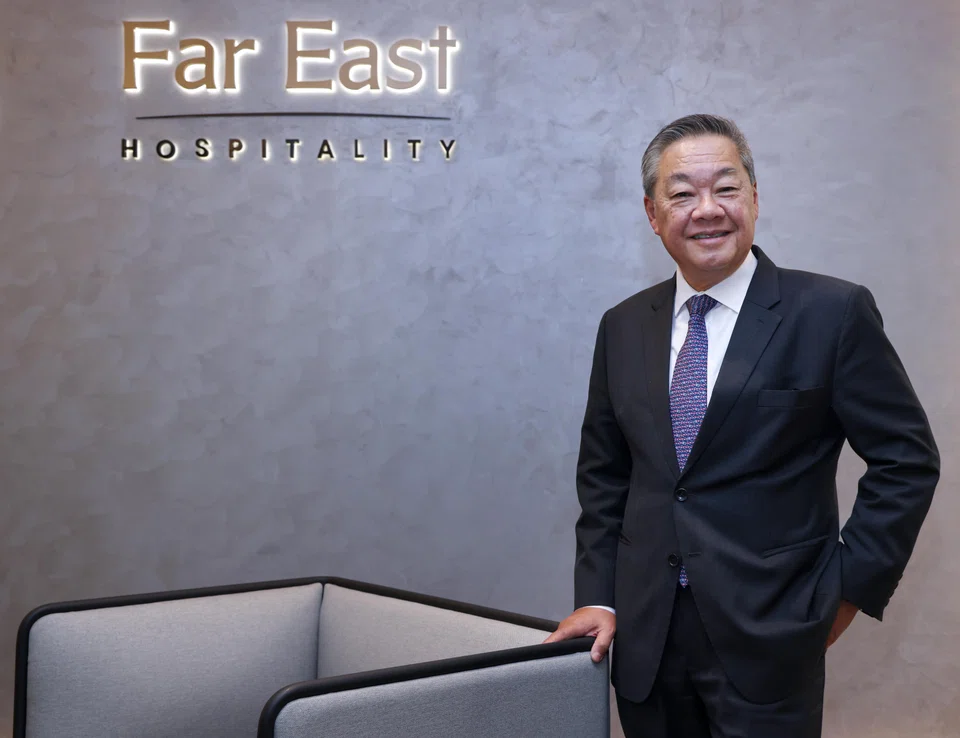
The tourism industry in Singapore is entering a new phase and the sector will need to deliver uniquely Singaporean experiences for visitors in order to survive.
Speaking to The Business Times, hospitality veteran Arthur Kiong, who has spent four decades in the industry, said: “Our first phase of tourism (was) ‘Me Too’. You have your Champs-Elysees and Fifth Avenue, we have Orchard Road.
“The second phase of tourism was ‘Me Better’. You’ve got convention centres, we’ve got a better (one).
“But where we need to compete, in order for tourism to survive in Singapore, is ‘Me Only’.”
Experiences which are unique, to the point that visitors are prepared to pay handsomely in order to enjoy them, would be the challenge going forward, he said.
Hotels can no longer take advantage of the demand, but will have to create it themselves.
Kiong said: “Hotels that take advantage of demand… build large convention hotels because you’re going to have all these concerts and events in town, and the hotel just has to be there, available, to absorb the demand that you’re bringing in.
“If you just provide the basic essentials, and you’re in a good location, close by the venues of interest, you’ll be able to sustain your business.”
Singapore is past that stage and hotels will need to be interesting enough to attract demand, which would be the challenge of the next 20 to 30 years, Kiong said.
He noted how for instance, some hotels have ventured into new sub-segments to reach a more diverse group of customers.
The veteran said: “The niche and micro markets we are seeing that are able to pay the rates that Singapore commands (is) the active ageing, longevity and wellness market. That would be a market that Singapore is trying to go after.”
As the Singapore hotel landscape sees more boutique players, however, it has become harder for the industry to come together and adjust rates to benefit from demand compression when several large-scale events take place at the same time, he said.
“Demand compression is when you have Formula 1 coinciding with Golden Week. When you create a compression, rates will then go up. That’s what everybody is hoping for.”
He said: “If we don’t regulate and move our rates to become more reasonable, we will not be able to get the meetings, incentives, convention and exhibitions business because people are worried about bringing the event to Singapore. How do (they) house my delegates at a reasonable price to make it commercially viable?”
Kiong noted how Chinese tourists recently described Singapore as “shockingly expensive”.
He said: “They may not be able to now afford the luxury hotels and they come down to the mid-tier hotels but there (are) still some expectations. It’s not as if mid-tier hotels – we can (have) no customer service.”
Singapore-style hospitality
Targeting the mid-tier segment was an intentional move when he accepted Far East Organization’s offer to start its hotel division in 2005.
Kiong believed that Singapore-style hospitality should have comfort without excess, aesthetics without ostentation, attentiveness without pretension and elegance with relevance.
These guiding principles gave the group an identity and a North Star to aim for, he said.
Kiong brought his philosophy to life with the four hotels Far East Hospitality manages on Sentosa.
Village Hotel Sentosa’s rooms can be combined to create integrated spaces providing comfort without excess, while The Barracks Hotel Sentosa’s colonial architecture is aesthetically pleasing without ostentation. The Outpost Hotel Sentosa is an adult-centric hotel, thoughtfully designed so “the place will not be overrun with families and kids” and the Oasia Resort Sentosa’s spa is aligned with its focus on wellness, Kiong said.
Pandemic opportunities
When it opened in 2021, the spa was a first for Far East Hospitality, as the group experimented with new concepts and operating models as it adapted to the Covid-19 pandemic.
Kiong said: “During a time of crisis, it allows people to reorganise themselves and try and do new things and push the boundaries of what we think we’re capable of.”
When the pandemic hit, the first thing to do was to make a decision on how long this was going to last.
Kiong had a feeling that the pandemic would be a multi-year affair, which led Far East Hospitality to repurpose some of its hotels for isolation.
Those hotels which did not go into quarantine provided a “golden opportunity” for the group to reshape how it delivered the hospitality experience, the hotelier said.
Deciding to target the staycation market, Kiong was strategic about finding a balance between what Singaporeans wanted and how the hotel could best meet their needs.
He said: “(Guests) want a low price, they want to have lots of freebies, right? And (they) all want to come the weekends. If (we) were to do that, what would then happen?
“By discounting and giving away freebies, you will be so jam packed (during) the weekends that you cannot cope because you don’t have the labour. And on the weekdays, (you) will have no business anyway.”
To avoid long queues forming, the hotels also staggered check-in timings and incorporated early check-in options into their pricing packages.
Still, Covid-19 was not the most challenging period of Kiong’s career, he said.
Instead, that was in the mid-1980s, when he first joined the industry and Singapore was experiencing a hotel room oversupply.
Prices were “so cut-throat” because of the glut, which made it very difficult for hotels to remain profitable, he said.
Future challenges
Looking at the outlook for Singapore’s hospitality market, Kiong said one positive factor was that hotel room supply is “palpably slowing down”.
The government is being very careful and not just creating more supply, he said.
“More hotel rooms in Singapore is a huge challenge, not because (of) increased competition for guests. It’s increased competition for labour that is more important.
“You need a whole battalion of housekeepers and security cleaners (who) are all foreign staff because we have accepted it’s virtually impossible to get young people to want to do housekeeping today.”
Kiong said: “The industry has a great need for local talent… Everybody wants to come in and start at the top, which is not possible in hospitality. You have to start at the front lines.”
A compelling reason for young people to join the industry would be how hospitality is all about getting along with people, he said.
“If you have the skill of knowing how to get along with people, you have solved 90 per cent of life’s problems, and it will bring you a more fulfilling life.”
He added: “Hospitality may not be very attractive on the surface because of the salary levels. But like anything else, if you are really good (at) what you do, the financial rewards will come.”