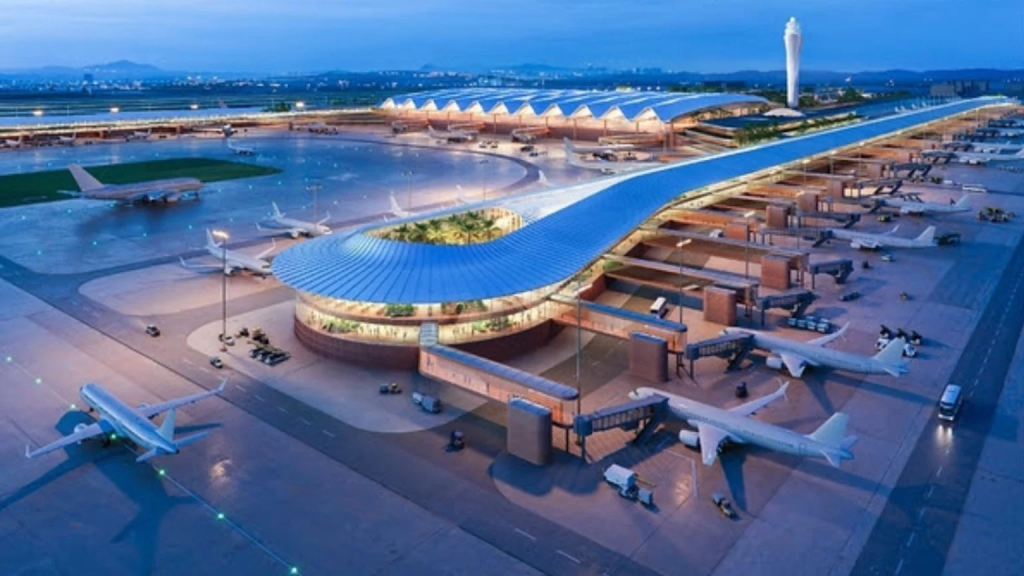
Artist’s impression of Gia Binh International Airport
Asian airlines and airports strengthen their international presence at Routes World 2026 in Frankfurt, with Vietnam’s Gia Binh International Airport presenting ambitious plans for future connectivity and airline partnerships.
Asian airlines and airports are playing a prominent role at Routes World 2026, taking place in Frankfurt from 21 to 23 October, as the region seeks to expand international air connectivity and attract new airline partnerships. The event brings together aviation decision-makers from more than 120 countries, including representatives from over 240 airlines. Notable Asian developments include the international debut of Vietnam’s Gia Binh International Airport, which is presenting its future route development strategy and holding more than 30 meetings with potential aviation partners.
- Routes World 2026 brings together representatives from over 240 airlines and more than 120 countries, with Asian carriers and airports participating in international route development discussions.
- Vietnam’s Gia Binh International Airport is making its international debut, with more than 30 airline and industry meetings focused on future passenger and cargo connectivity.
- Asian aviation stakeholders are using the event to explore new routes, strengthen airport partnerships and support international tourism and economic development.
Asian aviation strengthens its presence at Routes World 2026
The 31st edition of Routes World is taking place at Messe Frankfurt, bringing together airlines, airports, tourism authorities and aviation industry representatives to discuss future route development.
According to the organisers’ opening announcement, more than 2,600 delegates are expected to participate in the three-day event. In addition, over 8,500 business meetings will provide opportunities to explore new air services and strengthen existing partnerships.
Asia’s presence reflects the region’s importance to international aviation growth, particularly as airlines evaluate opportunities to expand networks and serve changing passenger demand.
Representatives from major Asian carriers include Cathay Pacific, Japan Airlines, IndiGo and Chinese airlines such as China Eastern Airlines, China Southern Airlines and Beijing Capital Airlines.
The participation of full-service and low-cost airlines illustrates the different business models shaping Asia’s aviation development. Meanwhile, airports across the region are seeking stronger connections with international markets and improved access to airline decision-makers.
Although Routes World provides a platform for commercial negotiations, participation does not automatically indicate that new services or route agreements have been finalised.
Vietnam’s Gia Binh International Airport makes strategic debut
One of the developments attracting attention is the international presentation of Gia Binh International Airport (GBIA), a major aviation infrastructure project under development in northern Vietnam.
The airport is being developed by Masterise Aviation Infrastructure JSC, part of Masterise Group, in Bac Ninh province, approximately 40 kilometres east of central Hanoi.
At Routes World 2026, the project team is holding more than 30 meetings with airlines and aviation partners from Asia, Europe, North America and the Middle East.
These discussions focus on the airport’s development plans, airline operating requirements, passenger connectivity and potential cargo services. Furthermore, the airport is exploring cooperation with tourism and destination development organisations.
Gia Binh representatives are also participating in the conference session “Securing Routes: How to Build Strong Partnerships Between Airlines, Airports, and Destinations”, examining cooperation between airports, airlines and tourism stakeholders.
The airport’s international debut comes before the launch of its main commercial operations. Consequently, the meetings represent early-stage airline engagement rather than confirmed route announcements.
Gia Binh targets northern Vietnam’s growing aviation market
Gia Binh International Airport aims to serve the expanding economic region encompassing Hanoi, Bac Ninh and Hai Phong, an important centre for manufacturing, investment and international trade.
According to analysis presented by the project developer, more than 30% of northern Vietnam’s potential international travel demand remains underserved by direct flights. This represents an estimated four to five million passengers annually. The airport also highlights a substantial regional market within short-haul flying distance. Its development team estimates that approximately 1.3 billion people and 297 airports lie within a three-hour flight radius.
These estimates support the project’s ambition to attract domestic, regional and long-haul services. However, they represent potential market access rather than confirmed passenger traffic.
Gia Binh’s initial development plans provide for capacity of approximately 30 million passengers annually, with longer-term expansion towards 50 million. The main passenger terminal is currently targeted to begin commercial operations in 2029.
Meanwhile, a smaller VIP facility is scheduled for 2027 in connection with Vietnam’s preparations for the APEC summit.
Airline partnerships to support a future international hub
Gia Binh’s proposed airline development strategy extends beyond point-to-point passenger services. The project aims to establish an international connecting hub serving domestic, regional and long-haul markets.
Initial network priorities include major Vietnamese cities and destinations across Northeast Asia, Southeast Asia and India. In the longer term, the airport hopes to develop services to Europe, North America and Australia.
The developer is considering tailored commercial arrangements for different airline categories. Full-service and long-haul carriers could receive route development support, while low-cost airlines would benefit from operational measures intended to improve turnaround efficiency.
Furthermore, dedicated cargo infrastructure is planned to support northern Vietnam’s manufacturing and high-technology export industries. The airport is also examining opportunities in aviation services and maintenance, repair and overhaul activities, although these remain part of its broader development ambitions.
What does Asia’s participation mean for international tourism?
The strong presence of Asian aviation stakeholders at Routes World 2026 highlights the relationship between air connectivity, tourism competitiveness and regional economic development.
For tourism authorities, direct international flights can improve destination accessibility and create opportunities to attract additional visitor markets. Meanwhile, airlines must evaluate passenger demand, operating costs and the commercial viability of proposed services.
Asian airports seeking new routes increasingly need to demonstrate the economic potential of their surrounding regions. This includes tourism demand, business travel, trade activity and the availability of supporting infrastructure.
Gia Binh offers an example of this approach, presenting its location within northern Vietnam’s economic corridor as an advantage for future aviation development. However, successful route development requires more than airport capacity. Airlines also need sustainable demand, competitive operating conditions and reliable surface transport connections.
For destinations across Asia, cooperation between airports, tourism boards and local businesses could help turn new aviation capacity into measurable tourism and economic benefits.
Industry outlook: Asia prepares for the next phase of global route development
Routes World 2026 demonstrates how Asian aviation stakeholders are positioning themselves for future international growth. Established airlines are evaluating network opportunities, while airport developers are seeking partnerships before major infrastructure projects become operational. For destinations competing to attract new services, the ability to present credible passenger forecasts and coordinated route development strategies will remain important.
Meanwhile, the growth of aviation infrastructure in markets such as Vietnam could create additional competition between regional airports and international connecting hubs. The longer-term commercial impact will depend on which discussions lead to airline commitments, viable routes and sustained passenger traffic.
With its participation in Frankfurt, Gia Binh International Airport has begun introducing its plans to the global aviation industry. Its development highlights a wider ambition across Asia to improve international connectivity, expand tourism opportunities and strengthen the region’s role in global aviation networks.
As Routes World 2026 concludes on 23 October, attention will turn to the partnerships and route development opportunities that emerge from the event’s discussions.