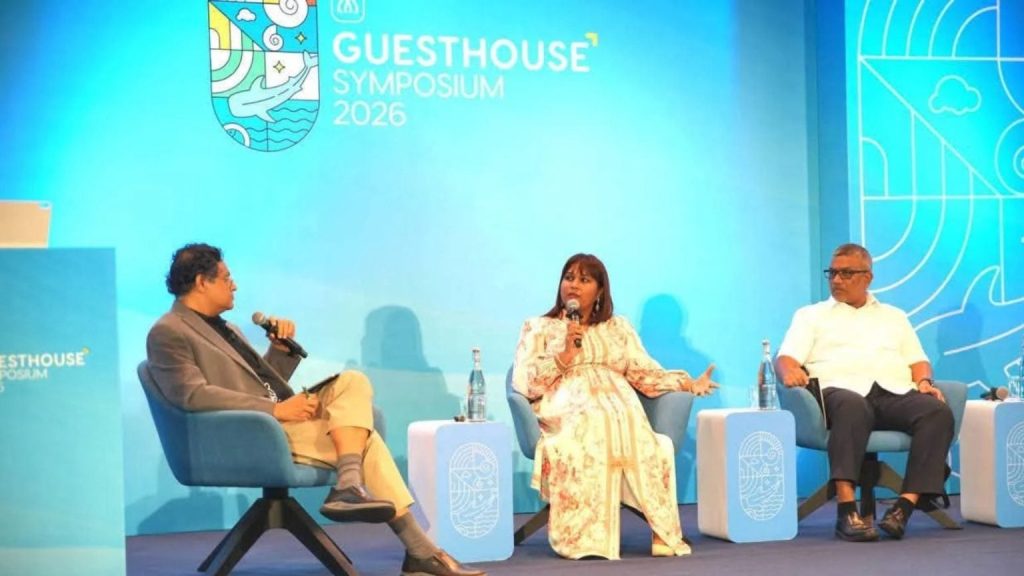
Maldives guesthouse tourism continues to expand, with 931 properties and more than 16,000 beds. The MIB Guesthouse Symposium 2026 highlighted financing, sustainability and opportunities for island communities. The Maldives’ locally operated guesthouse sector has expanded to 931 properties, offering more than 16,000 beds and accounting for 21.8% of tourist arrivals so far in 2026. The figures highlight the growing importance of Maldives guesthouse tourism alongside the country’s established luxury resort industry. This development took centre stage at the third annual MIB Guesthouse Symposium 2026, organised by Maldives Islamic Bank (MIB) on 15 October at Barceló Nasandhura Maldives, where around 200 industry representatives gathered to discuss sustainable growth, financing and hospitality standards.
- The Maldives has 931 operational guesthouses with more than 16,000 beds, accounting for 21.8% of tourist arrivals so far in 2026.
- The third MIB Guesthouse Symposium brought together around 200 stakeholders to address sustainability, innovation, financing and the future of local island tourism.
- The inaugural MIB Guesthouse Awards recognised hospitality businesses, individuals and island communities for service quality, environmental initiatives and local economic contributions.
Local island tourism becomes a major part of the Maldives economy
The Maldives has traditionally built its international tourism reputation around luxury resorts occupying private islands. However, the expansion of guesthouse accommodation on inhabited islands has created an additional model of tourism development, connecting visitors more directly with local communities.
Unlike private island resorts, guesthouses operate within established island settlements. Consequently, their economic contribution can extend beyond accommodation providers to restaurants, shops, transport operators, diving businesses and excursion organisers.
According to figures presented during the symposium, the country currently has 931 operational guesthouses with a combined capacity exceeding 16,000 beds. These establishments have accommodated 21.8% of tourists visiting the Maldives so far this year.
The figures demonstrate the scale of the sector, which now accommodates more than one in five international visitors. Furthermore, the growth of local island accommodation provides travellers with alternatives to the Maldives’ traditional resort experience.
MIB Guesthouse Symposium 2026 focuses on the industry’s future
Maldives Islamic Bank organised its third Guesthouse Symposium under the theme “Beyond the Stay: Building the Guesthouse of Tomorrow”. The event took place on 15 October 2026 at Barceló Nasandhura Maldives, bringing together around 200 participants from the hospitality and tourism sectors.
The programme focused on how guesthouse operators can respond to changing traveller expectations while improving service standards, operational resilience and sustainability. In addition, participants examined opportunities for collaboration and innovation across the local tourism economy.
Mufaddal Idris Khumri, Managing Director and Chief Executive Officer of Maldives Islamic Bank, described guesthouses as the second pillar of the country’s tourism industry during his opening remarks.
He highlighted their contribution to employment creation, local entrepreneurship and the distribution of tourism benefits among island communities. Meanwhile, Khumri reaffirmed the bank’s commitment to supporting guesthouse operators through financing and business development initiatives.
Guesthouse development supports employment and local businesses
The expansion of Maldives guesthouse tourism has created opportunities for communities on inhabited islands to participate more directly in the visitor economy. Accommodation businesses can generate demand for local services while providing employment opportunities close to residents’ homes.
Guesthouse visitors can also experience aspects of Maldivian daily life that differ from the self-contained resort model. These include local food, community traditions, island excursions and marine activities organised by resident businesses.
As a result, guesthouse tourism can support a wider network of small and medium-sized enterprises. Boat operators, diving instructors, restaurants and retailers may all benefit from spending generated by visitors staying on inhabited islands.
However, the economic impact differs between destinations and properties. Visitor spending, local ownership arrangements and the use of locally sourced goods and services influence how much tourism revenue remains within island communities.
Sustainability and marine conservation become priorities
As guesthouse capacity expands, environmental management is becoming increasingly important for the Maldives’ inhabited islands. Many tourism businesses depend directly on healthy reefs, clean beaches and marine ecosystems to attract international visitors.
During the symposium, Khumri highlighted the need to strengthen waste management, reef conservation and sustainable operating practices. He also stressed the importance of protecting the natural and cultural characteristics that make local island experiences distinctive.
For smaller accommodation operators, these priorities can present practical challenges. Waste collection, water management and environmental improvements may require investment that individual businesses cannot always finance independently.
Nevertheless, improved environmental standards can support the long-term attractiveness of island destinations. In addition, cooperation between guesthouse owners, local councils and marine tourism operators could help communities manage the pressures associated with increasing visitor numbers.
Islamic financing and digital innovation support guesthouse businesses
Maldives Islamic Bank is a Shariah-compliant financial institution offering banking services to individuals and businesses. Its involvement in the guesthouse sector includes financing support and initiatives designed to strengthen business development.
At the symposium, the bank reaffirmed its commitment to providing financial solutions for operators seeking to improve accommodation facilities, invest in services and strengthen their commercial operations.
Meanwhile, the event addressed digital transformation and the role of marketing in attracting travellers. Kiruba Shankar, an international speaker and online business strategist, delivered the keynote presentation on innovation, entrepreneurship and creating distinctive guest experiences.
His presentation examined opportunities for businesses to improve their digital presence and respond to changing customer expectations. These capabilities are particularly relevant to smaller accommodation providers competing for international bookings through online distribution channels.
The programme also included a presentation on foreign exchange regulations and compliance by specialists from SHC Law & Tax. Furthermore, an industry panel explored practical challenges facing guesthouse businesses and opportunities to strengthen competitiveness.
First MIB Guesthouse Awards recognise island hospitality
The 2026 symposium introduced the inaugural MIB Guesthouse Awards, designed to recognise businesses, individuals and island communities contributing to local tourism development.
The programme established 12 award categories covering hospitality, sustainability, community engagement and visitor experiences. The bank’s published ceremony results identified nine awards presented on 15 October.
Kamadhoo Inn received three distinctions for Authentic Maldivian Experience, Island Excursions & Experiences and Eco-Friendly practices. Meanwhile, Ocean Grand received the Service Excellence & Hospitality Award, and Bliss Dhigurah was recognised for Culinary Experience.
Kondey Garden Villa and Swarn by Hawksreceived Community Impact awards in their respective accommodation categories. Mohamed Shamoon Ameen earned the Outstanding Dive Master distinction.
At destination level, Fuvahmulah received the Guesthouse Tourism Champion Island award, recognising its contribution to the development of community-based tourism.
Industry outlook: Maldives guesthouse tourism offers growth beyond private island resorts
The expansion of Maldives guesthouse tourism reflects a broader opportunity to diversify the country’s tourism economy. While luxury resorts remain central to the destination’s international positioning, guesthouses provide additional accommodation choices and create opportunities for smaller local enterprises.
For international tour operators and online travel agencies, the growth of local island accommodation expands the range of products available to travellers. It also creates opportunities to develop itineraries combining guesthouse stays, cultural experiences, diving and marine excursions.
Meanwhile, financial institutions can play an important role in helping smaller operators improve service quality and digital capabilities. Access to suitable financing may support property upgrades and encourage businesses to invest in professional training and operational improvements.
However, growth also brings challenges. Inhabited islands must balance increased tourism activity with waste management, infrastructure capacity, housing requirements and the protection of sensitive marine environments.
Greater visitor numbers alone will not guarantee sustainable economic benefits. The sector’s long-term contribution will depend on business profitability, local employment, environmental performance and the share of tourism spending retained within island communities.
For policymakers and hospitality businesses, the priority will be supporting expansion while maintaining the qualities that distinguish local island tourism from conventional resort accommodation.
With 931 operational properties, more than 16,000 beds and a substantial share of international visitors, the Maldives’ guesthouse sector has become an established part of the national tourism industry. The MIB Guesthouse Symposium 2026 highlighted the importance of financing, professional standards, innovation and environmental management in supporting its next stage of development.