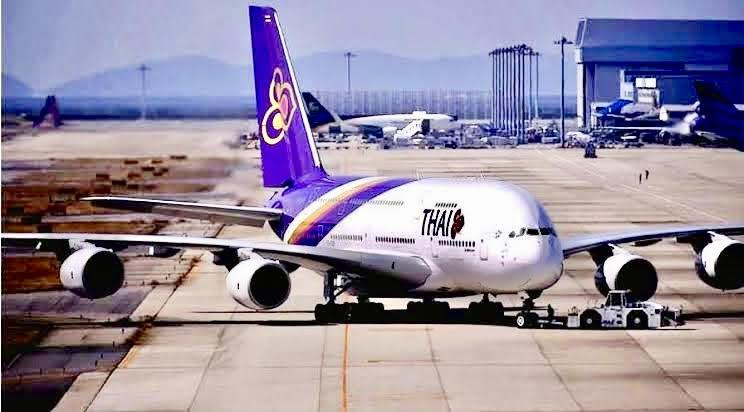
Thai Airways turnaround gains momentum as 2025 financial results confirm sustained profitability, stronger liquidity, disciplined capacity management and strategic positioning amid geopolitical risks affecting global aviation and long-haul connectivity.
Thai Airways International’s 2025 financial results mark an important milestone, but their real significance lies in what they reveal about the airline’s direction over the past three years. When viewed in context, the numbers confirm that Thai Airways is no longer experiencing a post-pandemic rebound. It is executing a sustained turnaround built on financial discipline, network rationalisation and operational focus.
In 2023, Thai Airways was still in early recovery mode. Revenue had improved from pandemic lows but remained well below pre-COVID levels, while profitability was fragile and heavily influenced by one-time restructuring items. Passenger volumes were recovering, yet yields were inconsistent and capacity constrained by fleet availability and cautious scheduling.
By 2024, the picture had sharpened. Revenue excluding one-time items rose meaningfully year on year, passenger traffic stabilised, and operating margins improved. Load factors edged higher, and the airline began to demonstrate tighter control over costs and capacity. Importantly, losses narrowed significantly, signalling that the core business was moving closer to breakeven on a sustainable basis.

The 2025 results complete this three-year progression. Total revenue reached 103.4 percent of pre-pandemic 2019 levels, while revenue excluding one-time items increased again to THB 190,277 million. Passenger revenue growth, though modest at 0.5 percent, was achieved alongside higher load factors, disciplined capacity deployment and improved yield quality. EBIT and EBITDA remained robust, and net profit of THB 30,940 million represented a decisive shift from recovery to profitability.
Operational trends reinforce this trajectory. Revenue Passenger Kilometres increased by 8.3 percent in 2025, following growth in 2024, while average cabin factor rose steadily from the mid- to high-70 percent range. Passenger numbers increased to 16.46 million, and cargo production and freight revenues also expanded. This consistency across multiple metrics confirms that demand recovery is being translated into operational performance, not diluted by overcapacity or weak pricing.
The balance sheet tells a similar story. Over the past three years, total liabilities have fallen sharply, shareholders’ equity has rebuilt, and liquidity has strengthened. Cash and cash equivalents now exceed THB 123 billion, giving Thai Airways resilience against external shocks and flexibility to manage fleet, routes and capital expenditure prudently.
Gulf war 2026 threats and opportunities
That resilience will be tested by current geopolitical risks, particularly the renewed instability linked to the Gulf conflict. Escalating tensions in the Middle East pose several threats to global aviation. These include higher fuel price volatility, potential airspace restrictions, longer routings and increased insurance and security costs. For airlines operating long-haul services between Asia and Europe, these risks are real and immediate.
However, disruption also creates opportunity. History shows that when routings through the Gulf become less attractive or more uncertain, passenger behaviour shifts. Thailand, with Bangkok as a major aviation hub, is well placed to benefit. Travellers from Australia and North Asia en route to Europe may increasingly favour stopovers in Thailand rather than transiting through congested or geopolitically sensitive hubs.
For Thai Airways, this environment supports a potential reboot of long-haul and connecting traffic. Strong links between Australia, Thailand and Europe offer the airline opportunities to capture passengers seeking stability, comfort and reliable schedules. Extended stopovers translate into higher local tourism spend, stronger inbound demand and improved network economics.
There is also scope to deepen connectivity within North Asia and the wider Asia-Pacific region. As airlines reassess exposure to Middle Eastern routings, demand for intra-Asian connections and alternative long-haul pathways may increase. Thai Airways’ measured fleet strategy, including modern narrow-body and efficient wide-body aircraft, positions it well to respond without overextending capacity.
Crucially, the airline’s current strategy appears aligned with these realities. Expansion plans for Summer 2026 remain cautious and market-driven, focusing on key growth destinations rather than headline-grabbing network announcements. This approach reflects lessons learned over the past decade and reinforces confidence that Thai Airways is building a business designed to endure volatility rather than amplify it.
In summary, the last three years show a clear and improving trend. Revenue quality has strengthened, costs are under control, the balance sheet has stabilised and operational performance continues to improve. While geopolitical risks remain a serious concern, Thai Airways International enters this period from a position of strength rather than vulnerability.
The 2025 results are not a one-off. They are the clearest indication yet that Thai Airways International has re-established itself as a disciplined, profitable and strategically relevant carrier in an increasingly uncertain global aviation landscape.