A strategic B2B analysis of how Operation Epic Fury and the closure of major Gulf hubs are disrupting tourism flows from Europe and the Middle East to Southeast Asia.
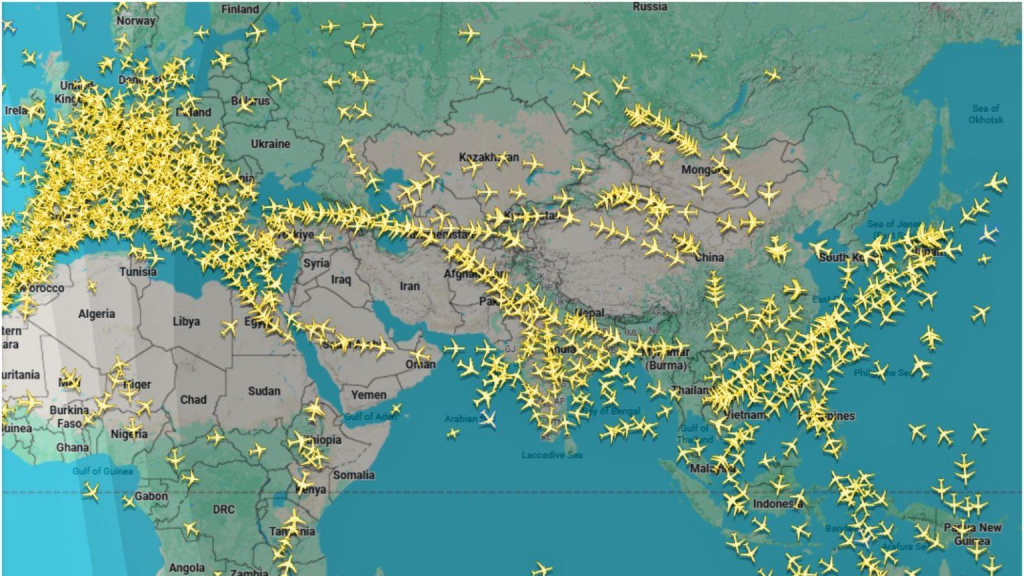
The military escalation on 28 February 2026 has reset the trajectory for Southeast Asia tourism arrivals 2026, as coordinated strikes by the United States and Israel against Iran paralyse the world’s most vital aviation corridors. Codenamed “Operation Epic Fury,” the offensive triggered a systemic shutdown of airspace over Iran, Iraq, and Kuwait, effectively severing the “aerial bridge” that connects Europe and the Middle East to markets in Thailand, Vietnam, and Malaysia. Τhe sudden suspension of operations at megahubs like Dubai International (DXB) and Hamad International (DOH) represents a structural shock to long-haul connectivity.
The impact is twofold: European travellers are facing 90-minute detours and technical refuelling stops, while the high-value Middle Eastern outbound market is being forced to reconsider its seasonal migrations. As the “geopolitical fog” thickens, the redistribution of traffic away from traditional Gulf gateways is creating a landscape of “winners and losers” across the ASEAN region.
The Hub Paralysis: Dubai and Doha Under Fire
The 28 February strikes have led to a total cessation of traffic at some of the world’s busiest transit hubs. Qatar Airways was among the first to react, temporarily suspending all operations to and from Doha. Simultaneously, Emirates and Etihad have faced massive disruptions, with long-haul flights from the U.S. and Europe diverted to alternative European cities or grounded mid-route.
Aviation analysts note that the loss of these hubs removes the primary one-stop connection for travellers heading to Southeast Asia. With Iranian and Iraqi skies empty, carriers are being pushed into overcrowded corridors over Saudi Arabia or more expensive northern routes via China. This operational inefficiency is projected to drive up “cost per seat” metrics, directly threatening the volume of Southeast Asia tourism arrivals 2026.
High-Value Loss: The Middle East Outbound Market to SEA
Middle Eastern residents are among the world’s highest-spending tourists, frequently spending 11 times the global average when travelling in Asia. Data from the 2025 ATM Travel Trends Report indicated that Thailand was the standout performer for this demographic, expected to capture 33% of outbound leisure nights.
Danielle Curtis, Exhibition Director ME at Arabian Travel Market, previously highlighted this momentum: “Thailand is the standout performer, as Asia-Pacific takes an even greater share of outbound travel from the Middle East, with over ten million extra tourism nights expected in 2030 compared with current levels, according to our report. It is one of the top outbound destinations for the UAE and broader GCC in 2025, with 12% growth year-on-year. Excluding inter-regional travel in the Middle East, Thailand is forecast to capture the second largest volume of outbound leisure nights for the period 2025-2030, with 33%.”
However, the current crisis threatens to evaporate these gains. Thapanee Kiatphaibool, Governor of the Tourism Authority of Thailand (TAT), expressed concern over the volatility: “The conflict in the Middle East has already had a wide impact on air travel in that region… TAT is also monitoring the long-term impact that could extend to other Middle Eastern countries, particularly Saudi Arabia, the United Arab Emirates, Oman, Kuwait, Qatar and Bahrain, which account for 80% of the overall Middle East market, if tourists perceive air travel as being unsafe.”
The Saudi Factor: Strategic Pivot or Vulnerable Pillar?
Saudi Arabia’s role in this crisis is uniquely complex. Under its Vision 2030 strategy, the Kingdom has invested $100 billion in the Saudi Aviation Strategy, aiming to triple annual passenger traffic. While Jeddah and Riyadh have seen significant increases in market share for early 2026, the current conflict has forced Saudia to maintain a “skeleton network” of operations.
Despite mass explosions heard in Riyadh following Iranian retaliation, Saudi Arabia has avoided a total airspace closure, allowing some traffic to continue. If the Kingdom can maintain operational safety, it may serve as an alternative bypass for traffic that can no longer transit Dubai or Doha. However, industry observers warn that investor confidence and mega-projects like NEOM may face delays if the “war zone” perception persists.
Winners and Losers: Which SEA Countries are Most Affected?
The redistribution of Southeast Asia tourism arrivals 2026 is not uniform. While some nations are seeing steep declines, others are emerging as resilient “safe havens.”
Affected: Thailand, Cambodia, and the Philippines
- Thailand: Facing a projected 30-50% plunge in arrivals from the Middle East. Phuket and Bangkok are expected to feel the immediate impact of the cancellation of Gulf services.
- Cambodia: Registered an 11.6% decline in international arrivals in early 2026 due to border tensions and safety perceptions.
- The Philippines: Struggling with airport congestion and slow digitalisation, arrivals remain well below pre-pandemic levels.
Benefiting: Vietnam, Malaysia, and Indonesia
- Vietnam: One of the fastest-growing markets in the world, Vietnam saw a 21.4% month-on-month rise in international arrivals in January 2026. Its diversified source markets have made it more resilient to Middle Eastern disruptions.
- Malaysia: Heavily invested in its “Visit Malaysia 2026” campaign, the country is on track to exceed 40 million visitors, benefiting from strong connectivity to secondary cities and a perceived buffer from conflict zones.
- Indonesia: Recorded a 10% increase in foreign visitors, with Bali remaining a primary draw for travellers seeking alternatives to the now-blocked Levant and Red Sea routes.
Strategic Mandate: Managing the “Whycation” Mindset
The 2026 traveller is no longer seeking simple escapism; they are looking for “safety certainty.” Bryan Batista, CEO of Skyscanner, noted the shift in consumer psychology: “Skyscanner’s 2026 Travel Trends report shows how travel is about to get more personal than ever. Next year will see travellers choose destinations and build itineraries that feel less like an escape and more like an expression of self. Whether it’s building a trip around a must-stay ‘destination hotel’, getting lost in a new favourite book on a reading retreat, or bringing the whole family along for the journey, travel will become more curated, grounded and uniquely personal.”
Τhis means that while volume might fluctuate, the value of those who do arrive is increasing. Operators must focus on “intentionality,” providing European and GCC travellers with transparent risk data and flexible booking options to maintain momentum in Southeast Asia tourism arrivals 2026.
A New Map for Asian Tourism
The closure of Middle Eastern hubs is a watershed moment for the travel industry. Success in 2026 will depend on the ability of SEA destinations to pivot toward direct-service carriers and alternative hubs like Istanbul. By embracing “quality over quantity” and leveraging real-time data to manage safety perceptions, the hospitality and tourism associations of Southeast Asia can weather this geopolitical storm and safeguard their recovery in an increasingly fragmented global order.